
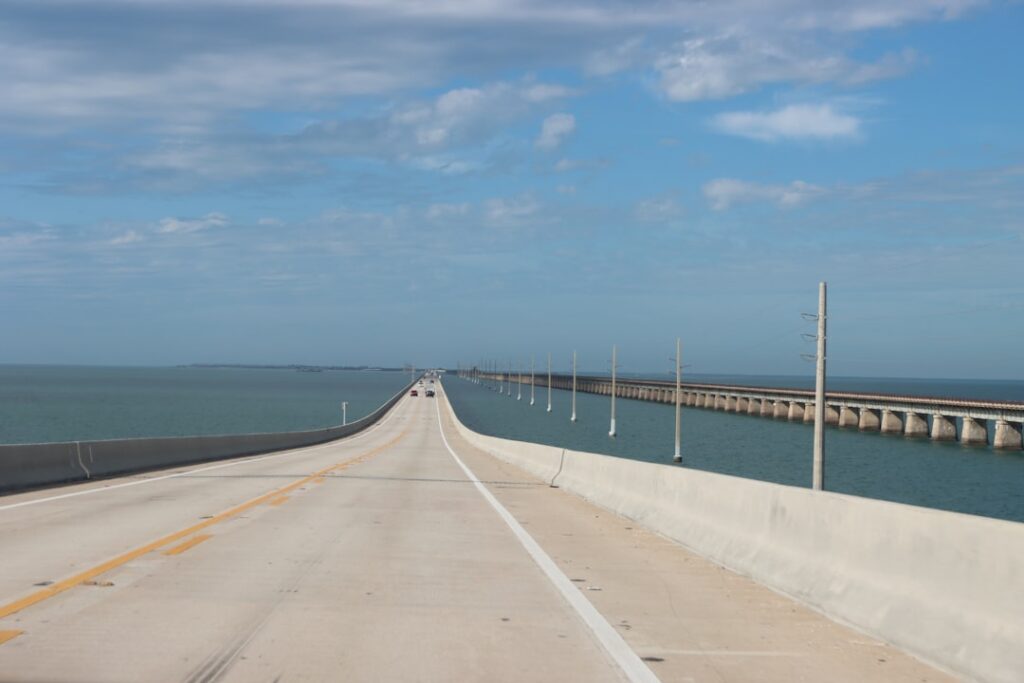
The drive from the Florida mainland to Key West ranks among America’s most spectacular road trips. The Overseas Highway stretches 113 miles across 42 bridges, connecting a string of coral and limestone islands where the Atlantic Ocean meets the Gulf of Mexico. But this journey deserves more than a straight shot to the end—each island community has its own character worth exploring.
Here’s how to plan a Keys road trip that captures the best of this unique corner of Florida.
Mapping Your Route and Timing
US Highway 1 is the only road through the Keys, which simplifies navigation but requires some strategy. Mile markers—starting at MM 126 in Florida City and counting down to MM 0 in Key West—serve as the universal address system. Locals and businesses use them constantly, so note them as you plan stops.
The drive from Miami to Key West takes about three and a half hours without stops, but you’ll want at least a full day to enjoy the journey properly. Most travelers either base themselves in one spot and day-trip to others, or spend a night or two in different keys to experience the full spectrum.
Weekend traffic can crawl, especially during snowbird season from January through March. Weekday mornings offer the smoothest drive southbound, with less traffic heading back north on weekday afternoons.
Key Largo: Diving and Snorkeling Central
The first major key you’ll reach, Key Largo spans roughly MM 107 to MM 91. This is diving headquarters for the Florida Keys, with easy access to John Pennekamp Coral Reef State Park—America’s first underwater park. The Christ of the Abyss statue sits submerged in 25 feet of water, a surreal sight whether you’re diving or snorkeling.
Stop at Mrs. Mac’s Kitchen (MM 99.4) for conch fritters and a snapshot of old Keys culture. The seafood comes fresh, portions run large, and the walls display decades of customer photos and fishing stories.
Don’t miss Dagny Johnson Key Largo Hammock Botanical State Park if you want to see what South Florida looked like before development. Six miles of trails wind through the largest remaining stand of West Indian tropical hardwood hammock in the United States.
Islamorada: The Sportfishing Capital
Islamorada—actually a village incorporating several keys from MM 90 to MM 73—calls itself the sportfishing capital of the world. Charter boats line the marinas, and you’ll see more mounted sailfish here than anywhere else in Florida.
The Theater of the Sea (MM 84.5) has operated since 1946, making it one of the world’s oldest marine mammal facilities. You can swim with dolphins, meet sea lions, or simply watch the marine life shows in a more intimate setting than the big-city aquariums.
For a classic Keys photo op, stop at the History of Diving Museum (MM 83) to see the evolution of diving equipment, then grab a key lime pie milkshake at Islamorada’s original tiki bar, the Lorelei Restaurant and Cabana Bar (MM 82).
Marathon: The Middle Ground
Marathon sits roughly halfway to Key West (around MM 50) and makes an excellent base camp. The famous Seven Mile Bridge begins here—actually two bridges, with the newer one carrying traffic and the old one (closed to vehicles) popular with walkers and photographers.
Sombrero Beach, on the ocean side, offers one of the few public beaches in the Keys with real sand and calm, shallow water perfect for families. Crane Point Museum and Nature Center provides 63 acres of preserved hammock, a natural history museum, and the remnants of a Bahamian village.
Stop at Keys Fisheries (MM 49) for lobster Reuben sandwiches and waterfront tables where tarpon circle below, waiting for scraps. It’s casual, delicious, and quintessentially Keys.
Key West: The Southernmost Point
The highway ends at mile marker zero in Key West, where the island culture shifts distinctly more cosmopolitan. The historic Old Town—roughly north of Truman Avenue—rewards walking. Duval Street runs the commercial spine, but the quieter lanes like Eaton, William, and Olivia streets showcase the island’s Caribbean-influenced architecture.
Mallory Square’s sunset celebration happens nightly, with street performers, vendors, and crowds gathering to watch the sun drop into the Gulf. For a quieter sunset experience, head to Fort Zachary Taylor Historic State Park, which also has the best beach in Key West.
Ernest Hemingway’s Home and Museum, the Key West Butterfly and Nature Conservatory, and the Harry S. Truman Little White House all offer air-conditioned cultural breaks from the heat.
Practical Tips for the Drive
Fill up your gas tank before leaving the mainland or Key Largo—fuel prices climb as you head south. Bring reef-safe sunscreen (regular sunscreen is banned in Key West to protect coral reefs). Pack water, snacks, and patience.
Most beaches in the Keys are man-made or rocky. If white sand is essential, you’re better served by Florida’s Gulf Coast. The Keys excel at water sports, fishing, diving, and a laid-back island atmosphere unlike anywhere else in the state.
Hurricane season runs June through November, with September historically the most active month. Summer brings heat, humidity, and afternoon thunderstorms, but also lower prices and fewer crowds.
Want more Florida travel stories and insider tips? Subscribe to the Love Florida newsletter—one short story a day in your inbox, helping you discover the real Florida beyond the brochures.
Tours & experiences in Florida


Powered by Viator. Some links are affiliate links — we may earn a small commission at no extra cost to you.