
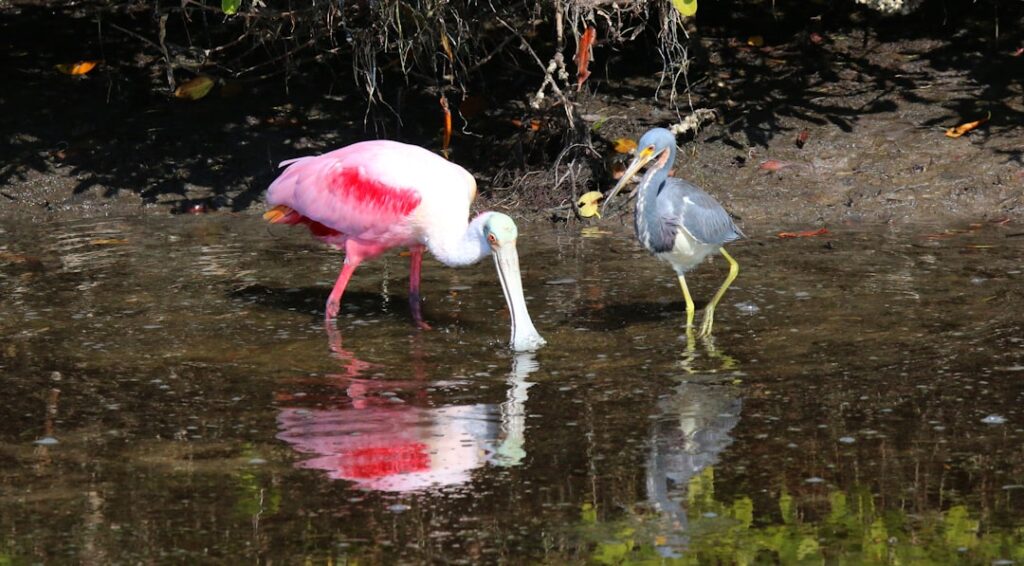
Florida sits along the Atlantic Flyway and hosts more than 500 bird species year-round and seasonally, making it a bucket-list destination for birders. Whether you’re tracking rare wading birds in the Everglades or watching pelicans dive-bomb the Gulf, the state’s mix of coastal wetlands, pine flatwoods, and subtropical hammocks creates exceptional habitat diversity.
You don’t need to be an expert to enjoy Florida’s birdlife. Grab a pair of binoculars, download a bird ID app, and head to these top spots where even casual observers will see something remarkable.
Merritt Island National Wildlife Refuge
Adjacent to Kennedy Space Center on Florida’s Space Coast, Merritt Island National Wildlife Refuge protects 140,000 acres of saltwater estuaries, freshwater impoundments, and coastal dunes. This is one of the most biodiverse birding areas in North America, with more than 330 species recorded.
The seven-mile Black Point Wildlife Drive is the refuge’s highlight—a one-way loop through marshes where you’ll spot roseate spoonbills, wood storks, tricolored herons, and white pelicans (in winter). Bald eagles nest here from October through May, and shorebird migration in spring brings thousands of dunlins, dowitchers, and plovers.
Visit early morning or late afternoon for the best light and activity. The refuge is free and open daily from sunrise to sunset. Winter months offer the highest species counts, but summer brings nesting activity and dramatic thunderstorm backdrops.
Ding Darling National Wildlife Refuge, Sanibel Island
J.N. “Ding” Darling National Wildlife Refuge on Sanibel Island protects over 6,400 acres of mangrove forests and submerged seagrass beds along the Gulf Coast. The four-mile Wildlife Drive winds through red mangroves where roseate spoonbills feed in the shallows alongside snowy egrets, reddish egrets, and great blue herons.
Stop at the observation tower for panoramic views of the bay, and bring a scope if you have one—the wading birds often feed far from shore. Alligators bask along the drive, and you’ll frequently see ospreys and bald eagles overhead.
The refuge charges $5 per vehicle for the Wildlife Drive (pedestrians and cyclists free). Go at low tide when mudflats expose feeding grounds. Peak birding season runs November through April, but summer offers nesting activity and fewer crowds.
Corkscrew Swamp Sanctuary
Managed by the Audubon Society near Naples, Corkscrew Swamp Sanctuary features a 2.25-mile elevated boardwalk through the largest old-growth bald cypress forest in North America. This is the place to see wood storks, North America’s only native stork, which nests here in winter.
The boardwalk passes through pine flatwoods, wet prairie, and ancient cypress strands where barred owls call during the day and limpkins probe for apple snails. Painted buntings—brilliant blue, green, and red songbirds—visit feeders near the visitor center in winter and spring.
Admission is $15 for adults, $6 for students. Visit December through April to see the wood stork rookery at peak activity. Early morning offers the best chance to see painted buntings at the feeders and hear the chorus of wading birds in the swamp.
Dry Tortugas National Park
Seventy miles west of Key West, Dry Tortugas National Park is famous for Fort Jefferson and crystal-clear snorkeling, but serious birders know it as one of the most important stopover sites for migratory birds crossing the Gulf of Mexico. During spring migration (late March through May), exhausted warblers, tanagers, and buntings literally fall out of the sky onto Garden Key.
The phenomenon called a “fallout” can bring 20 or more warbler species in a single morning—magnolia, blackburnian, Cape May, and cerulean warblers resting in the few trees and bushes near the fort. Magnificent frigatebirds and sooty terns nest on nearby keys.
Access is by seaplane or ferry from Key West (book well in advance). The Yankee Freedom ferry runs daily and costs around $190 round-trip, including snorkeling gear and breakfast. Spring migration is unpredictable—plan multiple days if possible to increase your chances of witnessing a fallout.
Tips for Birding in Florida
Bring sun protection, bug spray, and plenty of water—Florida birding often means standing still in exposed habitats. A spotting scope helps at refuges with distant mudflats and water bodies. Download the Merlin Bird ID app from the Cornell Lab of Ornithology for real-time identification help.
Winter (November through March) brings the highest diversity as northern species migrate south, but summer offers nesting activity and the chance to see Florida specialties like swallow-tailed kites and black-skimmers with chicks. Avoid midday heat; birds are most active at dawn and dusk.
Many refuges and parks offer free or inexpensive birding walks led by knowledgeable volunteers—check websites for schedules.
Want more Florida travel stories in your inbox? Subscribe to the Love Florida newsletter and get one short story a day about the state’s best beaches, hidden springs, wildlife encounters, and local food worth seeking out.
Tours & experiences in Florida


Powered by Viator. Some links are affiliate links — we may earn a small commission at no extra cost to you.