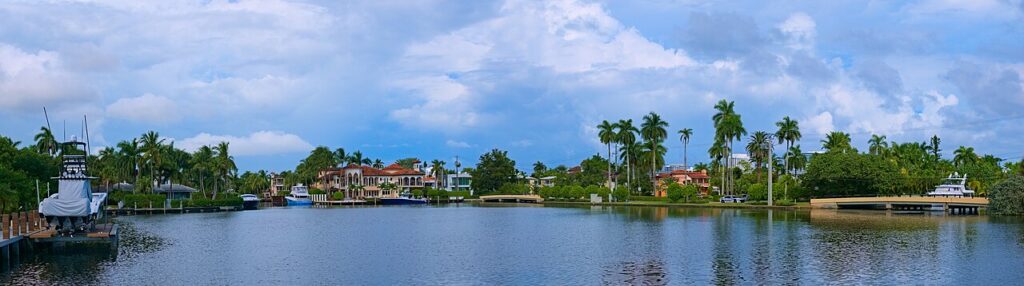
Fort Lauderdale gets plenty of attention for its broad Atlantic beach and beachfront promenade, but the real character of this South Florida city reveals itself on the water. With more than 300 miles of navigable waterways threading through neighborhoods, islands, and the Intracoastal Waterway, Fort Lauderdale earned its nickname as the ‘Venice of America’ honestly. If you only see the beach, you’re missing the best part.
The city’s canal system dates back to the early 20th century when developers dredged channels to create waterfront real estate. Today, those waterways define how locals live and how visitors should explore. From downtown’s Riverwalk to the mangrove-lined New River, Fort Lauderdale is a city best understood from a boat.
The Intracoastal and New River
The Intracoastal Waterway runs north-south through Fort Lauderdale, separating the mainland from the barrier island beaches. It’s a parade of mega-yachts, sailboats, water taxis, and tour boats, all navigating beneath drawbridges that open on schedule throughout the day. The New River cuts east-west through downtown, winding from the Everglades all the way to the Atlantic.
Walking the Riverwalk downtown gives you a glimpse, but getting on the water shows you the full picture. The Fort Lauderdale Water Taxi operates year-round, hopping between stops along the Intracoastal and New River. It’s transportation and sightseeing rolled into one—you can use it to reach restaurants in Las Olas, the beach, or the Galleria mall, all while watching waterfront mansions and passing yachts drift by.
For a closer look at the estates lining the canals, book a sightseeing cruise. Viator offers several options, including sunset cruises that time perfectly with the evening light painting the downtown skyline and palatial homes in gold. You’ll pass Millionaires Row, where homes sell for tens of millions and dock yachts the size of small ships.
Las Olas Boulevard and the Isles
Las Olas Boulevard is Fort Lauderdale’s most famous street, running from downtown to the beach. The western end, near the Riverwalk, is lined with galleries, boutiques, and sidewalk cafes. The eastern stretch crosses a series of finger islands—man-made peninsulas jutting into the Intracoastal—where homes face the water and boats are parked out front like cars in a driveway.
The Isles of Las Olas are worth a drive or bike ride. The streets are quiet, the architecture ranges from Mediterranean Revival to ultra-modern glass boxes, and the canals are everywhere. It’s a neighborhood built entirely around waterfront living, and it feels worlds away from the beach hustle just a mile east.
At the end of Las Olas Boulevard, you’ll reach Fort Lauderdale Beach and A1A. The beachfront promenade—a wide, brick-paved walkway—runs for miles, with restaurants, bars, and hotels on one side and sand and ocean on the other. It’s busy but not overwhelming, and the beach itself is wide and clean, with consistent waves that draw surfers year-round.
Hugh Taylor Birch State Park
Just north of the main beach strip, Hugh Taylor Birch State Park offers 180 acres of coastal hammock and mangrove swamp tucked between the Intracoastal and the ocean. It’s one of the few places in Fort Lauderdale where you can see what the barrier island looked like before development—shaded trails, lagoons, and thick vegetation that feels more like the Everglades than the city.
The park has a freshwater lagoon perfect for kayaking and paddleboarding, plus a network of paved and unpaved trails for walking and biking. Rent a paddleboard or kayak from the park’s concession and explore the lagoon’s mangrove edges, where you might spot herons, ospreys, and the occasional manatee that wanders in from the Intracoastal.
The beach access at the park is quieter than the main strip, with picnic areas and pavilions shaded by sea grapes and palms. It’s a local favorite for families and anyone looking to skip the beachfront scene without leaving the barrier island.
When to Visit and Getting Around
Fort Lauderdale’s weather is warm year-round, but the best time to visit is November through April, when humidity drops and afternoon thunderstorms are rare. Summer is hot and wet, with daily rain showers and the peak of hurricane season running from August through October.
You don’t need a car to explore the beach and downtown areas. The Water Taxi covers most key spots, and the Sun Trolley runs free routes connecting the beach, downtown, and Las Olas. If you’re venturing farther—to the Everglades, Flamingo Gardens, or Boca Raton—rent a car. Fort Lauderdale-Hollywood International Airport is a short drive or rideshare from downtown and the beach.
Parking at the beach can be tight on weekends. Arrive early or use one of the city’s paid lots along A1A. Metered street parking is available but fills quickly, especially near Las Olas Boulevard.
More Than a Beach Town
Fort Lauderdale has outgrown its spring break reputation. Today, it’s a city where waterways define the rhythm of life, where neighborhoods are shaped by canals, and where the best way to understand the place is to get on a boat. The beach is still beautiful, but the real discovery happens when you turn inland and follow the water.
Want more stories like this? Subscribe to the Love Florida newsletter and get one short story a day about the beaches, towns, wildlife, and waterways that make Florida worth exploring.
Heads up — some links in this article are affiliate links. If you sign up through them, we may earn a small commission at no extra cost to you. We only recommend tools we use ourselves.
Tours & experiences in Florida


Powered by Viator. Some links are affiliate links — we may earn a small commission at no extra cost to you.