
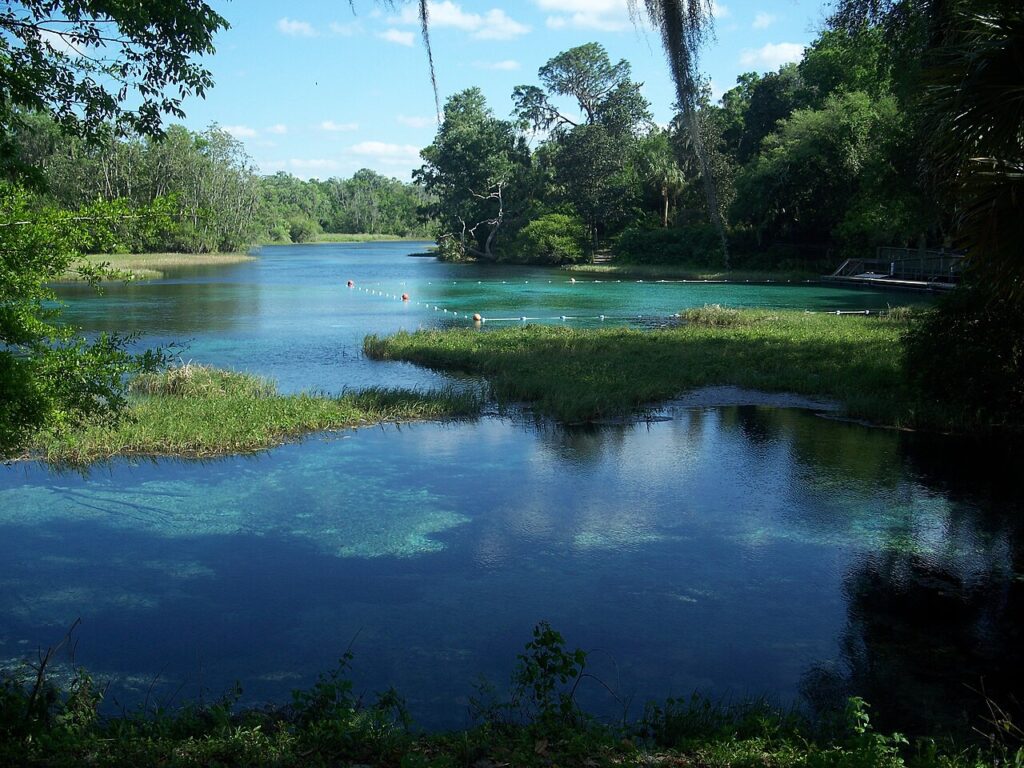
Florida sits on top of one of the world’s largest freshwater aquifer systems, and the result is more than 700 natural springs bubbling up through limestone—33 of them classified as first-magnitude springs, pumping out at least 64 million gallons of water daily. These aren’t just geological wonders. They’re some of the best places in the state to swim, snorkel, paddle, and escape the heat.
The water stays a constant 72 degrees year-round, which feels cool in summer and surprisingly warm in winter. The visibility can reach 100 feet on a good day. And unlike the Gulf or Atlantic, there’s no salt, no waves, and no jellyfish.
Which Spring Should You Visit?
Each spring has its own character. Silver Springs, near Ocala, is one of the largest and was Florida’s original tourist attraction—glass-bottom boats have been running here since the 1870s. You can still take those boat tours today, and the spring run is excellent for kayaking through jungle-thick vegetation where monkeys (yes, really) sometimes appear in the trees.
Ichetucknee Springs State Park, south of Lake City, is the tubing capital. The three-mile float down the Ichetucknee River takes about two hours in summer, drifting past cypress trees and turtles sunning on logs. You’ll need to arrive early on weekends—the park reaches capacity by mid-morning in peak season.
Ginnie Springs, privately owned and near High Springs, draws snorkelers and cave divers to its impossibly clear water. The main spring basin is perfect for families, while Devil’s Eye and Devil’s Ear are for certified cave divers only. Camping is available on-site if you want to make a weekend of it.
Rainbow Springs State Park, in Dunnellon, offers both a headspring for swimming and a four-mile paddling trail through one of Florida’s most beautiful spring runs. The gardens and waterfalls near the headspring make this one particularly photogenic.
When to Go
Summer weekends bring crowds, especially to the tubing springs. If you want the water mostly to yourself, visit on a weekday morning between September and May. Winter is actually ideal—that 72-degree water feels bath-like when the air temperature drops, and you’ll see steam rising off the surface on cold mornings.
Manatees know this too. In winter, they migrate from the Gulf into spring runs seeking warmer water. Crystal River and Homosassa Springs, on the Nature Coast, become manatee gathering spots from November through March. You can snorkel with them (following strict no-touch rules), and it’s one of Florida’s most extraordinary wildlife experiences.
What to Bring
Entrance fees vary by spring, and privately operated springs like Ginnie Springs set their own. Tube rentals are charged separately, so check each park’s official page for current fees.
Bring water shoes. Spring bottoms are usually sand or smooth limestone, but there can be rocks and roots along the edges. A snorkel and mask are worth packing even if you’re not a serious snorkeler—the fish, turtles, and occasional otter are easier to spot underwater.
Sunscreen is tricky. Many springs now prohibit certain chemical sunscreens to protect the delicate ecosystem. Check the park’s rules before you go, and consider a rash guard or UV swim shirt instead.
The Rules
Florida springs are fragile. The aquifer that feeds them is under pressure from development, agriculture, and drought. Water levels and clarity have declined at some springs over the past few decades, and algae blooms occasionally close swimming areas.
Do your part: don’t leave trash, don’t feed the wildlife, and don’t touch the turtles or manatees no matter how close they swim. Glass containers and disposable plastic are banned at most spring parks. If you’re tubing, stay in designated areas—trampling vegetation along the banks damages the ecosystem.
Some springs, particularly Blue Spring State Park near Orange City, close to swimmers during manatee season to protect the animals. Check ahead if you’re visiting between November and March.
Making the Most of Your Visit
Arrive early. Check each park’s official page for opening hours, and parking lots fill fast on summer weekends and holidays. Some parks, like Ichetucknee, stop admitting visitors once capacity is reached.
Combine your spring visit with nearby attractions. Silver Springs is part of Silver River State Park, which has hiking and horseback riding trails. Ginnie Springs is a short drive from the quirky town of High Springs, where you can grab lunch at one of the local cafes. Rainbow Springs is near the old Florida river town of Dunnellon, worth a stroll for its antique shops and riverside parks.
If you’re serious about exploring multiple springs, consider a north-central Florida road trip. You can easily visit four or five springs in a long weekend, staying in Gainesville or Ocala as a base.
Florida’s springs are unlike anywhere else in the state—or the country. They’re quiet, clear, and cold, a complete contrast to the beaches and theme parks that draw most visitors. Once you’ve floated down a spring run with sunlight filtering through the canopy and fish darting beneath you, you’ll understand why Floridians have been coming here for generations.
Want more Florida stories like this? Subscribe to the Love Florida newsletter and get one short story a day, delivered straight to your inbox.
Tours & experiences in Florida


Powered by Viator. Some links are affiliate links — we may earn a small commission at no extra cost to you.