
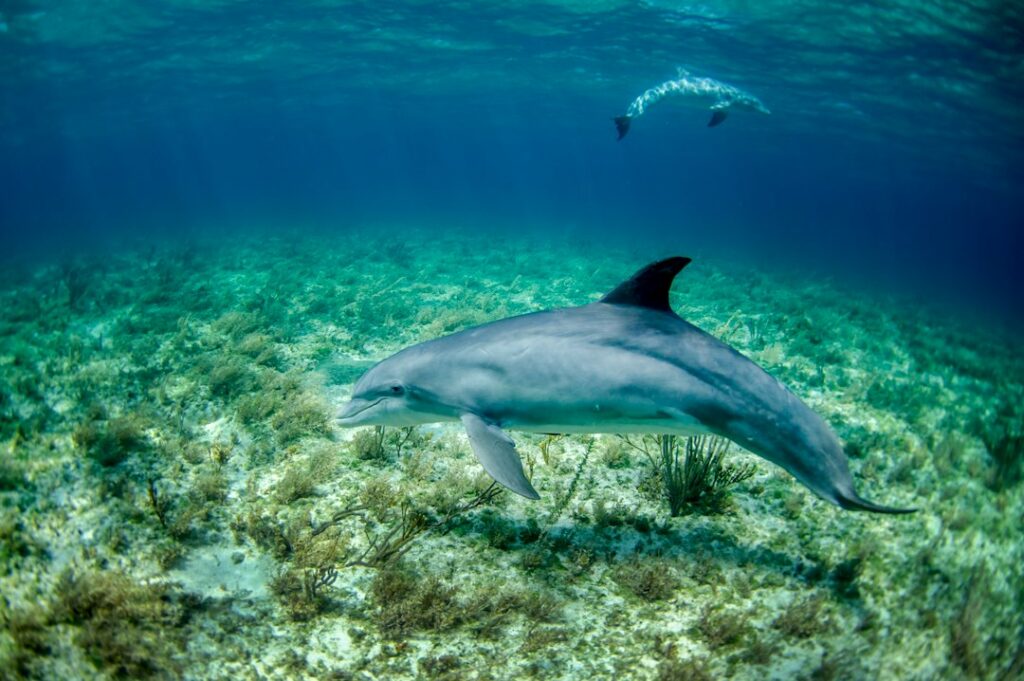
The Florida Keys stretch 120 miles into turquoise water, and nearly every mile of it is dolphin territory. Atlantic bottlenose dolphins live year-round in these shallow flats, channels, and coral reefs, and seeing them—whether from a boat, a kayak, or even while snorkeling—ranks among the most magical experiences the islands offer.
Unlike elsewhere in Florida, the Keys give you multiple ways to encounter dolphins: wild sightings during boat tours, guided kayak trips through mangrove channels, and even swim-with programs at marine facilities. Each offers something different, and knowing where to go makes all the difference.
Wild Dolphin Sightings on the Water
The best way to see dolphins in their natural habitat is to get out on the water early in the morning or late in the afternoon, when they’re most active. Dolphins hunt in the shallow flats around the islands, often working together to herd fish into tight schools.
In Islamorada, the backcountry flats between the Atlantic and Florida Bay teem with dolphin activity. Charter captains and eco-tour operators know the spots where pods frequently feed, especially near Channel Two and around Lignumvitae Key. You’ll often see them from the boat, but the real thrill comes when a pod decides to ride your wake, leaping and spinning just feet from the hull.
Marathon, in the Middle Keys, offers equally good dolphin-watching opportunities. The waters around the Seven Mile Bridge and Pigeon Key host resident pods, and kayakers paddling the mangrove creeks near Curry Hammock State Park frequently spot dolphins gliding through the channels at high tide.
In Key West, sunset cruises and snorkel trips to the reef often include dolphin sightings. The animals seem curious about boats heading out to the Dry Tortugas or circling the mangrove islands west of town. Keep your eyes on the water during any boat trip—dolphins appear when you least expect them.
Kayaking with Dolphins in the Backcountry
If you want a quieter, more intimate encounter, rent a kayak or join a guided paddle through the Keys backcountry. The shallow bays and mangrove-lined channels offer calmer water and a better chance of close-up sightings without the noise of an engine.
John Pennekamp Coral Reef State Park in Key Largo rents kayaks and offers guided eco-tours through mangrove trails where dolphins sometimes hunt for fish trapped by the tide. The park’s calm waters make it ideal for beginners, and the guides know where dolphins have been spotted recently.
In Marathon, launch from Sombrero Beach or Curry Hammock State Park and paddle the flats toward the mangrove islands. Dolphins often feed here in the early morning, and if you stay quiet and keep your distance, they’ll sometimes approach out of curiosity. Never chase or try to touch a wild dolphin—let them come to you, and they often will.
Interactive Dolphin Programs
For travelers who want a structured, hands-on experience, the Keys offer several facilities where you can swim with or interact with dolphins in controlled environments. These programs aren’t for everyone, but they do provide education about dolphin behavior and marine conservation.
Theater of the Sea in Islamorada has been operating since 1946 and offers swim-with-dolphin programs in a natural saltwater lagoon. You’ll wade into shallow water and interact with trained dolphins under the supervision of marine mammal specialists. The facility also rescues and rehabilitates injured sea turtles and other wildlife.
In Marathon, Dolphin Research Center on Grassy Key focuses on research and education. Their programs range from shallow-water encounters to deeper swims, and all proceeds support the center’s work studying dolphin communication and cognition. It’s a good choice if you want the experience to feel educational rather than purely recreational.
These programs book up quickly, especially during winter and spring break, so reserve well in advance. Expect to pay between $200 and $300 per person, depending on the length and type of interaction.
When to Go and What to Bring
Dolphins live in the Keys year-round, so you can see them in any season. That said, calmer seas in late spring and early fall make boat trips and kayaking more pleasant, and you’re more likely to spot dolphins when the water is clear and flat.
Summer brings afternoon thunderstorms that can cut trips short, and winter occasionally brings cold fronts with rough seas and reduced visibility. Check the marine forecast before you book a tour, and aim for early morning departures when the wind is typically lightest.
Bring polarized sunglasses to cut the glare and help you spot dorsal fins breaking the surface. A waterproof camera or phone case is essential—dolphins move fast, and you’ll want to be ready. Sunscreen, a hat, and plenty of water are non-negotiable, especially on open-water boat tours.
If you’re kayaking, wear quick-dry clothing and water shoes. The flats are shallow, and you may need to step out to push your kayak over sandbars. And always keep a respectful distance from wildlife—federal law prohibits harassing or disturbing marine mammals, and a $100 fine isn’t worth the risk.
Why the Keys Are Special for Dolphin Lovers
What sets the Florida Keys apart is the sheer density of dolphins and the variety of ways to see them. You’re not limited to one type of tour or one location—you can kayak the backcountry in the morning, snorkel the reef at midday, and take a sunset cruise in the evening, with a good chance of seeing dolphins on all three.
The local guides and captains know these waters intimately, and many have been watching the same dolphin pods for years. They’ll point out individual animals, explain their behaviors, and share stories that turn a sighting into something deeper. It’s not just about checking dolphins off a list—it’s about understanding the ecosystem they live in and why protecting it matters.
Whether you’re watching a pod hunt in the flats, listening to a dolphin whistle underwater, or simply catching a glimpse of a dorsal fin at sunset, the experience stays with you. The Keys make it easy to fall in love with these animals, and that’s exactly the point.
Want more insider tips on exploring the Florida Keys? Subscribe to the Love Florida newsletter and get one short story a day, straight to your inbox.
Tours & experiences in Florida


Powered by Viator. Some links are affiliate links — we may earn a small commission at no extra cost to you.