
Long before Little Havana shaped Miami’s food scene, Tampa’s Ybor City was the beating heart of Florida’s Cuban culture. Founded in the 1880s by cigar manufacturers, this historic neighborhood became home to thousands of Cuban, Spanish, and Italian immigrants who rolled cigars by day and built a vibrant food culture that still defines Tampa today.
Walk down Seventh Avenue, and you’ll smell it: fresh bread from century-old bakeries, café con leche steaming in tiny cups, and the unmistakable aroma of roasted pork and garlic that announces a proper Cuban kitchen. This is where the Cuban sandwich was born, and where you can still taste it the way it was meant to be made.
The Original Cuban Sandwich
Tampa’s Cuban sandwich differs from Miami’s version in one crucial way: it includes Genoa salami, a nod to Ybor City’s Italian community. The rest is sacred: Cuban bread baked fresh daily, roasted pork, ham, Swiss cheese, pickles, and yellow mustard, all pressed until the bread crackles and the cheese melts into every layer.
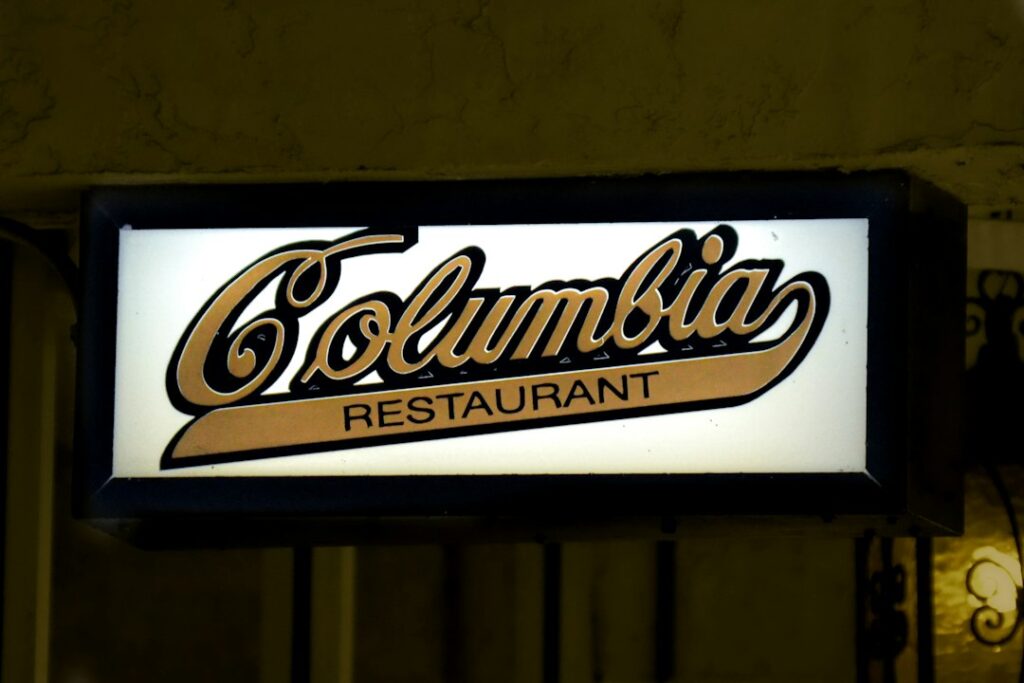
The Columbia Restaurant, Florida’s oldest restaurant founded in 1905, serves the sandwich that set the standard. Their version is perfectly balanced, with the salami adding a slight spice that cuts through the richness of the pork. The restaurant itself sprawls across an entire city block, with fifteen dining rooms filled with hand-painted tiles and Spanish artwork. Come for lunch and stay for the flamenco show that’s been running since 1961.
For a more casual experience, head to La Segunda Central Bakery on 15th Street. They’ve been baking Cuban bread since 1915, and their small café counter serves sandwiches made with loaves that come out of the oven every few hours. The bread alone is worth the visit—crispy crust, soft interior, and a slight sweetness that balances the savory fillings.
Beyond the Sandwich
While the Cuban sandwich gets most of the attention, Ybor City’s Cuban restaurants offer the full spectrum of traditional cooking. West Tampa Sandwich Shop, just outside Ybor proper on Howard Avenue, has been family-run since 1974 and serves some of the best ropa vieja in Tampa—shredded beef slow-cooked with tomatoes, peppers, and spices until it falls apart on your fork.
Their arroz con pollo comes in a portion big enough to share, with saffron rice cooked in chicken stock and vegetables that soak up every bit of flavor. Order a side of black beans and sweet plantains, and you have the kind of meal that explains why locals have been coming here for decades.
Bernini of Ybor blends the neighborhood’s Italian and Cuban heritage with dishes like their picadillo—ground beef with olives, raisins, and spices served over rice. The combination of sweet and savory reflects the cultural fusion that makes Ybor City’s food scene unique.
Café Culture and Sweet Finishes
No visit to Ybor City is complete without experiencing the neighborhood’s café culture. Naviera Coffee Mills has been roasting Cuban coffee since the 1950s, and their café serves it the traditional way: strong, sweet, and in portions meant to be sipped slowly while standing at the counter talking with strangers who become friends.
Order a colada—a small pot of espresso meant for sharing, served with tiny cups—or a cortadito, espresso cut with steamed milk and sugar. Pair it with a pastelito de guayaba, a flaky pastry filled with guava paste and cream cheese that strikes the perfect balance between tart and sweet.
For dessert, La Tropicana Café serves flan that’s silky smooth with a caramel that’s never too sweet, plus tres leches cake that’s properly soaked but never soggy. Their Cuban toast—buttered and grilled with a thin layer of sugar that caramelizes—makes an ideal afternoon snack.
When to Go and What to Know
Ybor City is walkable and best explored on foot. Parking is available in several public lots along Seventh Avenue, and the TECO Line streetcar connects Ybor to downtown Tampa and the Channel District.
Weekday lunches offer a more authentic experience, when the restaurants fill with locals who know exactly what they want. Weekend evenings bring crowds to the nightlife scene, but the restaurants stay focused on the food that built this neighborhood’s reputation.
Most spots are casual—counter service or family-style dining with vinyl booths and no pretense. Cash is accepted everywhere, and many smaller cafés prefer it.
The weather is best from October through April, when you can enjoy the outdoor seating that lines Seventh Avenue. Summer brings afternoon thunderstorms, but the cafés stay open and the coffee stays hot.
Tampa’s Cuban food scene isn’t a recreation or a tourist attraction—it’s a living tradition that’s been passed down through generations of families who came to Ybor City to work and stayed to build something lasting. Every sandwich, every cup of coffee, every plate of picadillo carries that history.
Ready to taste more of Florida? Subscribe to the Love Florida newsletter and get one short story about the real Florida delivered to your inbox every day.
Tours & experiences in Florida


Powered by Viator. Some links are affiliate links — we may earn a small commission at no extra cost to you.