
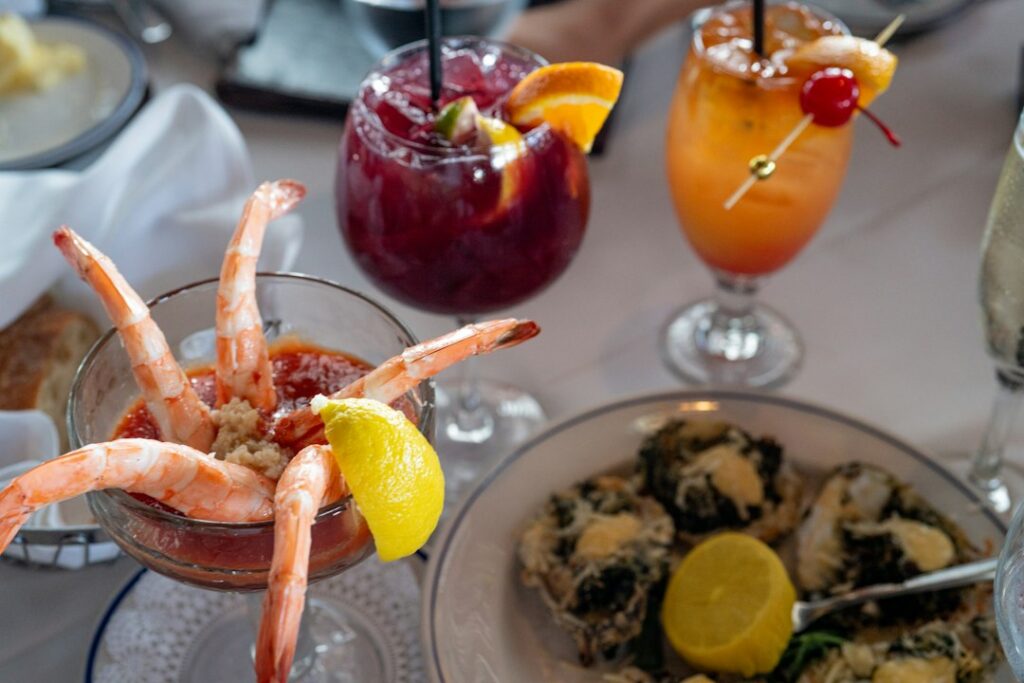
Stone crab season runs from October 15 through May 1 each year, and during these months, Florida’s Gulf and Atlantic coasts deliver one of the state’s most prized seafood treasures. Unlike other crabs, stone crabs are harvested for their claws only — one or both are removed, and the crab is returned to the water to regenerate them. It’s a sustainable fishery that’s been feeding Floridians and visitors for more than a century.
The claws are cooked immediately after harvest, then chilled and sold fresh or frozen. You’ll find them at seafood markets, dockside restaurants, and white-tablecloth dining rooms from the Panhandle to the Keys. They’re served cold with mustard sauce, cracked and ready to eat, and the sweet, firm meat is unlike anything else.
Where to Find the Best Stone Crab
Miami Beach is home to Joe’s Stone Crab, the restaurant that made stone crab famous. Open since 1913, Joe’s serves nothing but the freshest claws during season, and the lines prove it. Expect a wait, but the claw-cracking experience and creamy hash browns are part of Florida food history.
On the Gulf Coast, Naples and Marco Island are major stone crab hubs. Pinchers Crab Shack has locations across Southwest Florida and serves claws by the pound with melted butter and mustard sauce. For a more upscale experience, try The Dock at Crayton Cove in Naples, where you can eat claws on the water and watch boats unload the day’s catch.
In the Florida Keys, stone crab is a staple. Key West’s Half Shell Raw Bar and Islamorada’s Lorelei Restaurant & Cabana Bar serve claws straight from local traps. The closer you are to the docks, the fresher the crab — and in the Keys, that’s about as close as it gets.
If you’re in Tampa or St. Petersburg, head to Frenchy’s Rockaway Grill in Clearwater Beach or Crabby Bill’s in Indian Rocks Beach. Both serve stone crab during season, along with other Gulf seafood, and the casual waterfront vibe makes them local favorites.
How the Fishery Works
Florida’s stone crab fishery is one of the most regulated and sustainable in the country. Fishermen set traps in shallow waters along the coast, check them daily, and remove only claws that meet the minimum size — about three inches from tip to joint. Undersized claws and female crabs carrying eggs are off-limits.
After the claw is removed, the crab is thrown back. Studies show that stone crabs can regenerate a claw in about 18 months, though it takes two to three molts to reach full size again. The survival rate is high when claws are removed properly, and the fishery has remained strong for decades.
Because the claws must be cooked within hours of harvest to preserve quality, you won’t find live stone crabs at the market. What you will find are pre-cooked, chilled claws, often sold by the pound and graded by size — medium, large, and jumbo. Jumbo claws can cost upward of $40 per pound, but the meat yield and flavor make them worth it for a special meal.
How to Crack and Eat Stone Crab
Stone crab claws come pre-cooked and cracked, but you’ll still need to do some work. Most restaurants provide a small wooden mallet and a cracker. Tap the shell gently to break it, peel away the pieces, and pull out the meat in one clean piece if you can.
The traditional accompaniment is mustard sauce — a tangy blend of mayo, mustard, Worcestershire sauce, and a touch of cream. Some people prefer melted butter, and that works too. Either way, don’t overcomplicate it. The claw meat is sweet and delicate, and it doesn’t need much.
If you’re buying claws to take home, ask for them cold-packed with ice. They’ll keep in the fridge for two to three days. To reheat, some people warm them briefly in the oven, but most purists insist they’re best served cold, straight from the shell.
When and Where to Go
The season peaks from late October through December, when the first cold fronts push crabs into shallower water and traps fill up. By January, supply levels out, and prices stabilize. If you’re visiting Florida specifically for stone crab, plan your trip for November or early December.
Most coastal towns celebrate the season with seafood festivals. The Everglades Seafood Festival in early February and the Florida Seafood Festival in Apalachicola both feature stone crab, though supplies vary depending on the harvest.
For the freshest claws, visit fishing communities like Cortez, Matlacha, or Goodland, where you can buy directly from fish houses. These small operations sell by the pound, and the prices are often better than what you’ll find at restaurants or markets in tourist areas.
Stone crab season is short, and the claws don’t last long once they hit the market. If you’re in Florida between October and May, make it a point to try them at least once. It’s a taste that defines the coast.
Want more insider tips on Florida’s food, beaches, and seasonal travel? Subscribe to the Love Florida newsletter — one short story a day, straight to your inbox.
Tours & experiences in Florida


Powered by Viator. Some links are affiliate links — we may earn a small commission at no extra cost to you.