
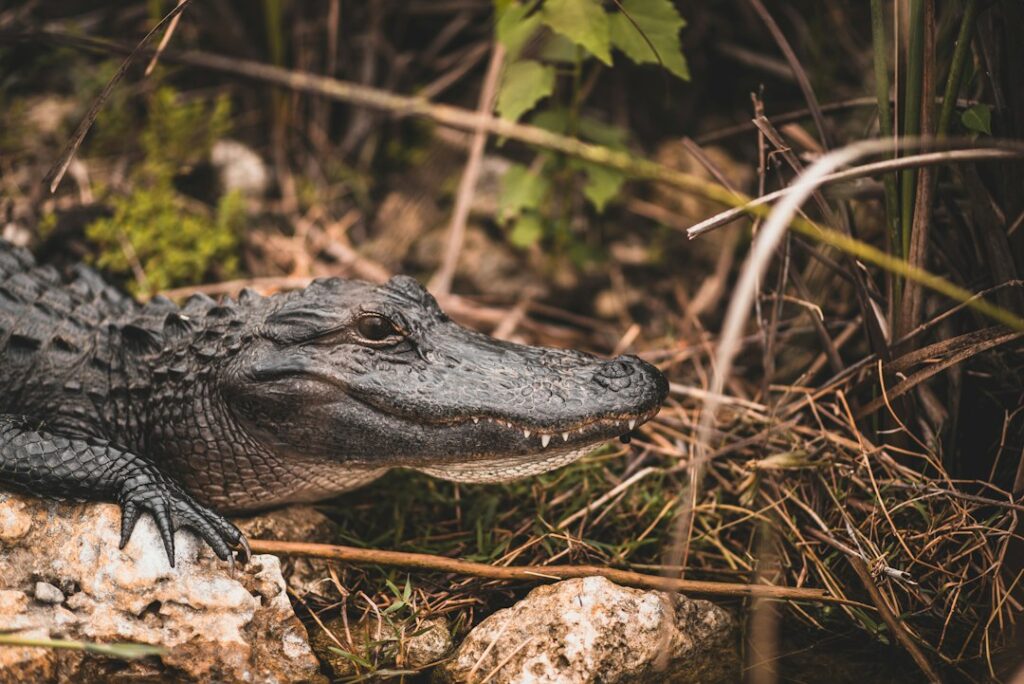
Nothing says Florida quite like spotting your first wild alligator. These prehistoric reptiles have called the state home for millions of years, and today you’ll find them in nearly every freshwater body across Florida. Whether you’re hoping for a glimpse from a safe distance or want to learn more about their behavior and habitat, knowing where to look and what to expect makes all the difference.
Here’s your complete guide to seeing alligators in Florida—safely and responsibly.
Best Places to See Alligators in the Wild
The Everglades remains the undisputed alligator capital of Florida. At Shark Valley in Everglades National Park, the 15-mile paved loop trail puts you eye-level with gators sunning themselves along the canal. Rent a bike or take the tram tour, and you’ll likely spot dozens basking on the banks or gliding through the water. The Anhinga Trail at the park’s main entrance is another reliable spot—gators congregate here year-round, especially during the dry season from December through April when water levels drop and wildlife concentrates around remaining pools.
Myakka River State Park near Sarasota offers some of the most accessible alligator viewing in the state. The Upper Myakka Lake and the park’s shallow wetlands support a thriving population. Walk the canopy walkway for an aerial view, or rent a kayak to paddle quietly past gators lounging on the shoreline. Just remember to keep your distance—at least 15 feet on land and more if you’re in the water.
For Central Florida visitors, Gatorland in Orlando provides a controlled environment where you can see hundreds of alligators up close, including massive breeding bulls that can exceed 13 feet. While not a wild setting, the park’s breeding marsh walkway offers an authentic look at natural gator behavior. If you prefer genuinely wild encounters near Orlando, head to Lake Apopka Wildlife Drive or the wetlands around Merritt Island National Wildlife Refuge near the Space Coast.
In Southwest Florida, the J.N. “Ding” Darling National Wildlife Refuge on Sanibel Island and the Corkscrew Swamp Sanctuary near Naples both offer excellent gator sightings along boardwalk trails. The boardwalks keep you safe while providing unobstructed views of gators in their natural cypress swamp habitat.
When You’re Most Likely to See Them
Alligators are most active during warmer months, from April through October, when you’ll see them moving, feeding, and basking throughout the day. Early morning and late afternoon are prime viewing times—gators emerge to regulate their body temperature and hunt as the day heats up or cools down.
Winter months bring less activity. When temperatures drop below 70°F, alligators become sluggish and may stay submerged or hidden in dens for days at a time. But winter has one advantage: the dry season concentrates wildlife around shrinking water sources, making gators easier to spot even if they’re less active.
Mating season runs from April to June, when you might hear the deep, rumbling bellows of male alligators claiming territory. Females nest in June and July, becoming more defensive of their territory. If you encounter a hissing gator or one that approaches rather than retreats, back away immediately—she may be protecting a nearby nest.
Safety Tips Every Visitor Should Know
Alligators are wild animals and deserve respect. Never feed them—it’s illegal in Florida and teaches gators to associate people with food, creating dangerous situations. A fed gator is a dead gator, as wildlife officials will remove and often euthanize animals that lose their fear of humans.
Keep at least 15 feet away on land, and never approach one in the water. Alligators can move surprisingly fast in short bursts—up to 35 mph on land for a few yards—though they rarely chase people. If you’re walking near water at dawn or dusk, stay alert and keep pets on short leashes. Small dogs can resemble natural prey.
Swimming in designated areas only is crucial. Don’t wade or swim in unmarked lakes, retention ponds, or canals. Even golf course ponds harbor gators. If you’re kayaking or paddleboarding, give gators plenty of space and never paddle between a mother and her young.
Most alligators will slip quietly into the water when they sense you approaching—that’s normal, healthy behavior. An alligator that holds its ground or hisses is telling you to back off. Listen to that warning.
Making the Most of Your Gator Adventure
Bring binoculars for a closer look without getting too close. A zoom lens or smartphone with a good camera will capture memories without requiring you to approach. Polarized sunglasses help you spot gators beneath the water’s surface—look for their distinctive silhouette or the telltale eyes and nostrils breaking the surface.
If you’re visiting the Everglades, airboat tours offer a unique perspective and knowledgeable guides who know exactly where to find gators. Many tours also teach you about the ecosystem and the important role alligators play in maintaining wetland health.
Remember that alligators are a success story. Once hunted nearly to extinction, their populations have rebounded thanks to protection and careful management. Today, an estimated 1.3 million alligators live in Florida—proof that humans and wildlife can coexist when we respect their space and habitat.
Want more insider tips on exploring Florida’s wild side? Subscribe to the Love Florida newsletter for one short story a day about the state’s best beaches, wildlife, food, and hidden gems delivered straight to your inbox.
Tours & experiences in Florida


Powered by Viator. Some links are affiliate links — we may earn a small commission at no extra cost to you.