
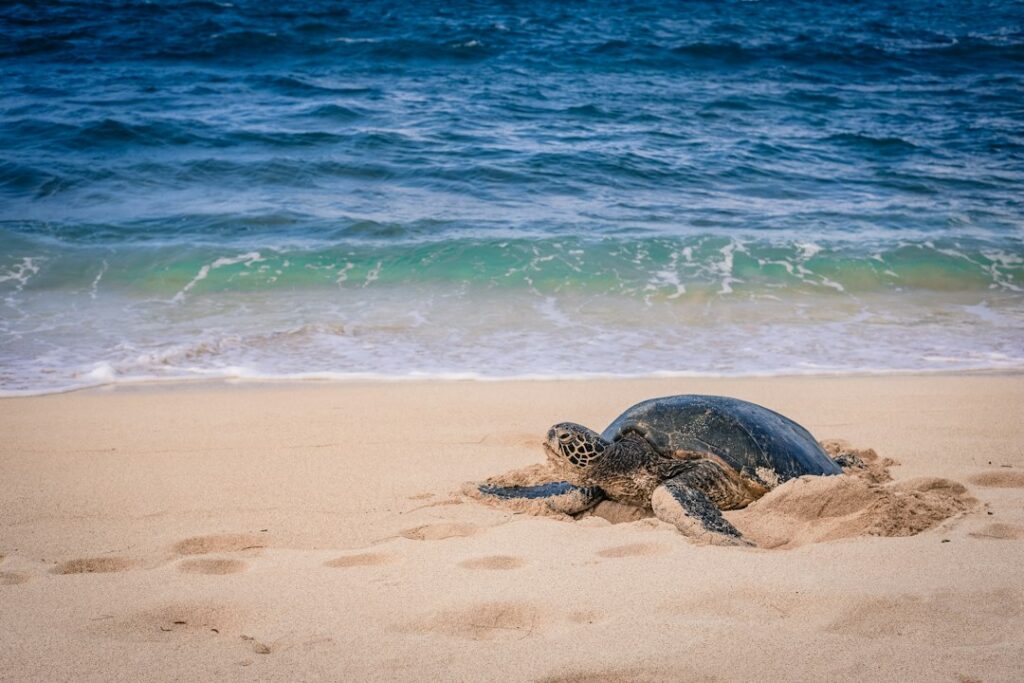
Every summer, Florida’s beaches transform into one of the planet’s most important sea turtle nurseries. Five species—loggerhead, green, leatherback, Kemp’s ridley, and hawksbill—return to the same stretches of sand where they were born decades earlier, crawling ashore under cover of darkness to lay their eggs. Watching a sea turtle nest or seeing hatchlings make their first dash to the ocean ranks among Florida’s most moving wildlife experiences.
The nesting season runs from May through October, with peak activity in June and July. Hatchlings typically emerge 45 to 70 days after the eggs are laid, meaning August through October offers the best chances to witness baby turtles racing toward the surf.
Where to See Sea Turtles Nesting
Florida’s Atlantic coast, from Melbourne Beach south through Boca Raton, sees the highest concentration of nests. Archie Carr National Wildlife Refuge, stretching 20 miles between Melbourne Beach and Wabasso Beach, protects the most important loggerhead nesting beach in the Western Hemisphere. The beaches here remain undeveloped and dark—critical for nesting females who avoid artificial lights.
Juno Beach, north of Palm Beach, hosts organized turtle walks led by the Loggerhead Marinelife Center from May through June. Reservations open in March and fill quickly. These guided walks offer the rare opportunity to observe nesting turtles up close with trained naturalists who explain the process while ensuring the animals aren’t disturbed.
On the Gulf Coast, Sanibel Island, Casey Key near Sarasota, and the beaches around Naples all support significant nesting populations. The Conservancy of Southwest Florida in Naples leads turtle monitoring programs and occasional public walks during peak season.
In the Panhandle, the beaches around Destin and Panama City Beach see fewer nests than the southern coasts but still host regular nesting activity, particularly from loggerheads.
Watching Turtles Responsibly
Sea turtles are federally protected, and disturbing them carries serious penalties. If you encounter a nesting turtle on your own, stay at least 50 feet back and remain quiet. Never use flashlights, camera flashes, or phone screens—even red lights can disorient the animals. Nesting turtles will abort the process and return to the ocean if they feel threatened.
For hatchlings, the rules are even stricter. Never touch them or attempt to help them reach the water. The crawl from nest to ocean imprints critical information they’ll need to return decades later. Turn off all beach-facing lights from May through October if you’re staying in beachfront accommodations.
Most coastal communities enforce lighting ordinances during nesting season, requiring residents to close curtains and shield outdoor lights. As a visitor, follow these practices even if not legally required where you’re staying.
Joining an Organized Turtle Walk
Permitted turtle walks offer the best way to see nesting turtles without risking harm to the animals. The Loggerhead Marinelife Center in Juno Beach runs the most established program, with walks starting around 9 p.m. and often lasting past midnight. Participants gather indoors until scouts locate a nesting turtle, then small groups walk to the beach to observe.
Gumbo Limbo Nature Center in Boca Raton offers similar programs in June and July. Sebastian Inlet State Park on the Space Coast hosts ranger-led walks. The Sea Turtle Conservancy in Melbourne Beach provides educational programs and occasional guided experiences.
Many programs fill months in advance. If organized walks are booked, consider staying at a beachfront hotel that partners with local conservation groups—several properties from Vero Beach to Fort Lauderdale offer informal turtle talks and will alert guests when nesting activity occurs nearby.
What Happens After Nesting
Female sea turtles dig cavities with their rear flippers, deposit 80 to 120 eggs, then cover and camouflage the nest before returning to the ocean—a process taking one to three hours. Each female may nest multiple times per season, returning to the beach every two weeks.
Conservation teams mark nests with stakes and tape to protect them from human traffic. Two months later, hatchlings emerge together, usually at night, and scramble toward the brightest horizon—naturally the ocean reflecting moonlight, but increasingly artificial lights that lure them inland to their death.
Coastal Florida’s turtle patrols work through the night during hatching season, redirecting confused hatchlings and shielding them from predators until they reach the water. If you’re on the beach at dawn from August through October, you might see the telltale tracks in the sand showing where dozens of tiny turtles made their journey hours before.
Want more Florida wildlife encounters and insider travel tips? Subscribe to the Love Florida newsletter—one short story a day about the real Florida, beyond the brochures.
Tours & experiences in Florida


Powered by Viator. Some links are affiliate links — we may earn a small commission at no extra cost to you.