
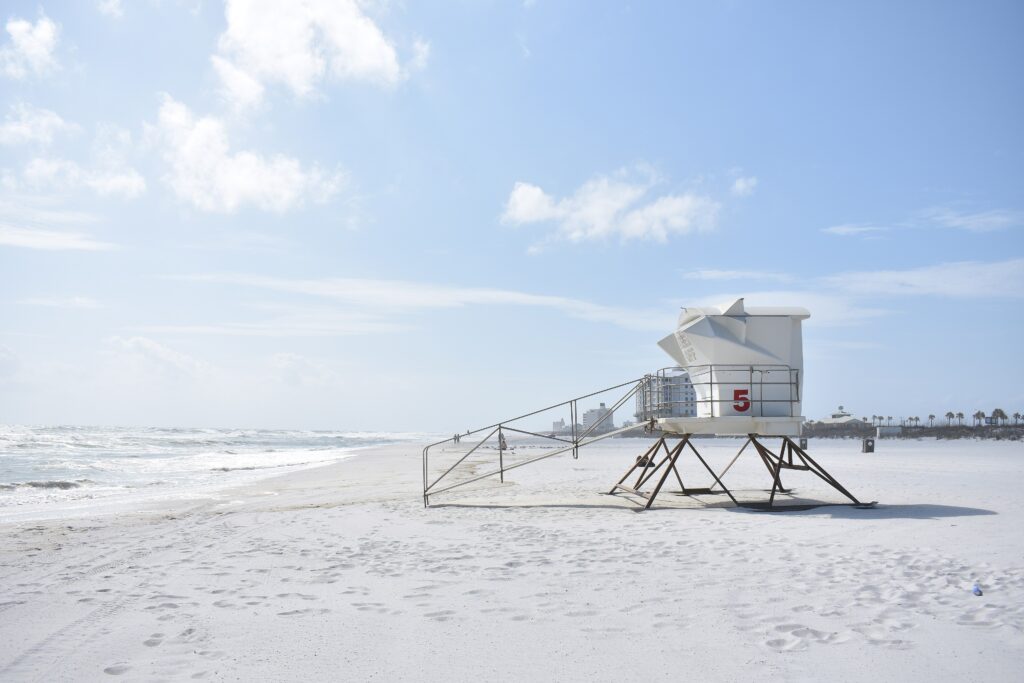
Pensacola Beach consistently ranks among Florida’s most beautiful coastal destinations, and for good reason. The sugar-white quartz sand practically glows in the sunlight, the emerald waters of the Gulf shimmer just offshore, and the pace feels refreshingly unhurried compared to Florida’s busier beach towns. But there’s more to this Panhandle paradise than its postcard-perfect shoreline.
If you’ve only heard about the sand, you’re missing half the story. Pensacola Beach sits on Santa Rosa Island, a barrier island that’s home to historic military sites, excellent snorkeling, fresh Gulf seafood, and some of the best preserved natural coastline in the state.
The Gulf Islands National Seashore
More than seven miles of Pensacola Beach fall within the Gulf Islands National Seashore, protecting one of the longest stretches of undeveloped barrier island in Florida. The main beach area near Fort Pickens Road offers ample parking, clean facilities, and lifeguards during peak season, but venture east toward the Navarre Beach end and you’ll find quieter stretches where you might share the sand with only a handful of beachcombers and shorebirds.
Fort Pickens itself, located at the western tip of Santa Rosa Island, is worth at least a half-day visit. This massive brick fortress dates back to 1834 and played roles in the Civil War and both World Wars. You can explore the dark corridors, climb to gun positions overlooking the Gulf, and walk the nature trails that wind through coastal dunes. The fort’s fishing pier is popular with anglers year-round, and the nearby campground offers some of the best beachfront camping in Florida.
Entrance to the national seashore costs $15 per vehicle and is valid for seven days—an absolute bargain considering the access it provides. Arrive early on summer weekends, as the Fort Pickens area parking fills up by mid-morning.
Snorkeling the Shipwrecks
Just offshore from Pensacola Beach lie several intentionally sunken vessels that have become thriving artificial reefs. The most accessible for snorkelers is the USS Massachusetts, a battleship replica sunk in shallow water specifically for divers and snorkelers. On calm days with good visibility, you can see the structure from the surface and watch schools of spadefish, sergeant majors, and occasional rays glide past the encrusted metal.
Local dive shops along Pensacola Beach Boulevard offer snorkel gear rentals and can point you to the best entry points based on current conditions. The summer months from June through September typically offer the warmest water and clearest visibility, though the Gulf here remains diveable much of the year. Always check conditions before heading out—the currents can be strong, and local knowledge matters.
Where to Eat and Drink
Pensacola Beach’s dining scene punches well above its weight for a small barrier island community. Peg Leg Pete’s, with its sprawling deck and live music, serves solid Gulf seafood in a casual, family-friendly atmosphere. Order the grouper sandwich or the peel-and-eat shrimp—both come straight from local boats.
For a more upscale experience, head to The Grand Marlin on the Pensacola Beach Marina. The second-story dining room overlooks the harbor, and the kitchen focuses on fresh, simply prepared seafood with a Southern accent. The crab-stuffed flounder and the blackened mahi-mahi are standouts. Reservations are recommended, especially for sunset seating.
Don’t miss Flounder’s Chowder House, a Pensacola Beach institution since 1979. The She-Crab soup is legendary, and the beachfront setting—complete with tiki bar and volleyball court—captures the laid-back vibe that defines this stretch of coast. Come for lunch, stay for a cold beer, and watch the beach scene unfold.
Practical Tips for Your Visit
Pensacola Beach is an easy drive from Pensacola proper—about 15 minutes over the Bob Sikes Bridge from downtown. Parking along the main beach areas is metered in summer but free from October through February. Bring quarters or use the ParkMobile app.
The Pensacola Beach Pier, extending 1,471 feet into the Gulf, is the longest pier on the Gulf of Mexico. It costs $2 to walk out (free for anglers who pay the $7.50 fishing fee), and the views from the end are spectacular. Early morning and late afternoon are the best times for photos and wildlife watching.
If you’re visiting between March and October, consider timing your trip around one of the beach’s festivals. The Pensacola Beach Air Show in July brings the Blue Angels roaring over the Gulf, while the Bushwacker Festival in September celebrates the frozen cocktail invented right here at the Sandshaker Lounge.
The water stays warm enough for swimming from May through October, with August and September offering bath-like temperatures. Hurricane season runs June through November, so keep an eye on forecasts if you’re planning a late summer or early fall trip.
Whether you come for the famous sand, the history, the snorkeling, or the seafood, Pensacola Beach rewards visitors who take time to explore beyond the shoreline. This is Florida’s Panhandle at its most welcoming—beautiful, unpretentious, and full of pleasant surprises.
Want more Florida travel stories and insider tips delivered to your inbox? Subscribe to the Love Florida newsletter—one short story a day to help you discover the real Florida, beyond the brochures.
Tours & experiences in Florida


Powered by Viator. Some links are affiliate links — we may earn a small commission at no extra cost to you.