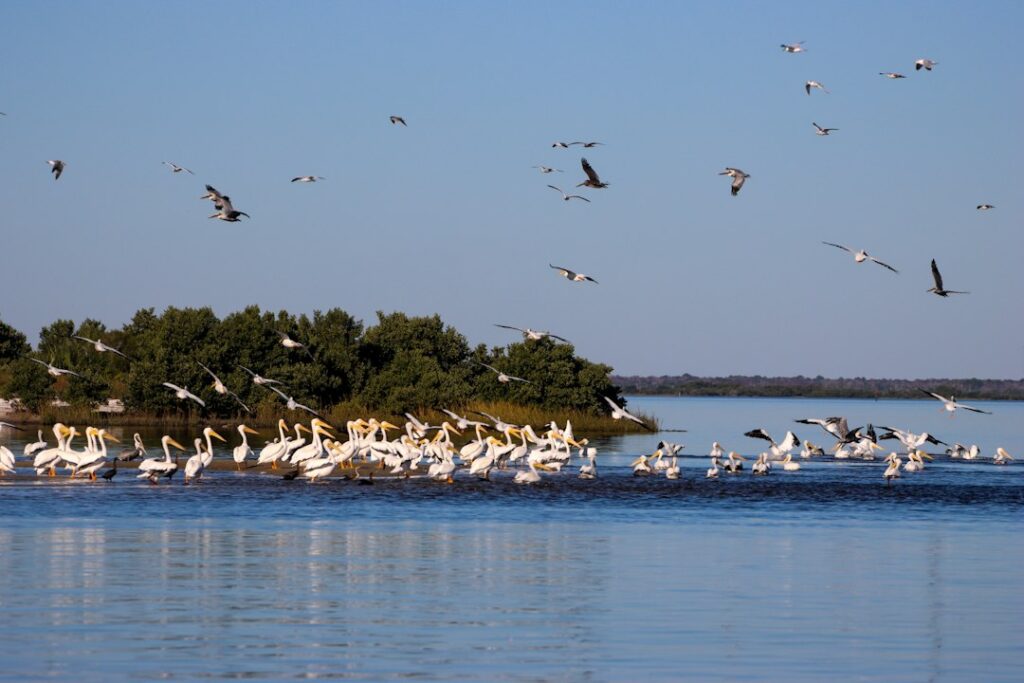
Florida’s position along the Atlantic Flyway, combined with its diverse ecosystems ranging from coastal wetlands to inland forests, makes it one of the top birding destinations in North America. The state is home to more than 500 bird species, including year-round residents, winter migrants, and rare tropical visitors that stray north from the Caribbean.
Whether you’re a serious birder with a life list or simply curious about the colorful wading birds you’ll see along the coast, these spots offer some of the best bird-watching experiences in the state.
J.N. “Ding” Darling National Wildlife Refuge
Located on Sanibel Island, this 6,400-acre refuge is named after the Pulitzer Prize-winning cartoonist and conservationist who helped establish it. The four-mile Wildlife Drive winds through mangrove forests and tidal marshes where you’ll spot roseate spoonbills, white pelicans, reddish egrets, and the occasional bald eagle.
Visit during winter months (December through March) for the best birding—that’s when migratory species arrive from the north. Early morning offers the most activity, and the tides matter: low tide concentrates fish in shallow areas, attracting wading birds. You can drive, bike, or walk the loop, though most birders prefer to stop frequently and scan with binoculars. The refuge rents kayaks and canoes if you want to paddle the mangrove trails.
Check the refuge’s official page for entry fees. The refuge is closed on Fridays.
Merritt Island National Wildlife Refuge
Just north of Kennedy Space Center on Florida’s Space Coast, Merritt Island protects more than 140,000 acres of brackish estuaries, salt marshes, and hardwood hammocks. The Black Point Wildlife Drive, a seven-mile loop, takes you through prime habitat for painted buntings, scrub jays (found only in Florida), and during winter, massive flocks of ducks and shorebirds.
The refuge sits along the Atlantic Flyway, making it a critical stopover for migratory birds. In winter, you might see northern pintails, blue-winged teal, and American avocets. Spring and fall bring waves of warblers. Year-round residents include ospreys, great blue herons, tricolored herons, and wood storks.
Check the refuge’s official page for entry fees. Arrive at dawn for the most bird activity, and bring plenty of water—there are no facilities along the drive. Mosquitoes can be brutal in summer, so plan your visit for the cooler months between November and April.
Everglades National Park
The Everglades’ vast sawgrass prairies, cypress domes, and mangrove coastlines host an incredible diversity of birdlife. Anhinga Trail, which starts at the Royal Palm Visitor Center about four miles past the main entrance, is arguably the best single birding trail in Florida. The 0.8-mile round-trip boardwalk puts you eye-level with anhingas drying their wings, purple gallinules stepping across lily pads, and great egrets stalking fish in the shallow slough.
Winter (December through March) is peak season—birds concentrate around shrinking water sources, making them easier to spot. You’ll see wood storks, white ibis, glossy ibis, little blue herons, and if you’re lucky, the endangered snail kite hunting for apple snails.
Further into the park, the Flamingo area at Florida Bay attracts roseate spoonbills, reddish egrets, and American oystercatchers. Check the park’s official page for the current entrance fee. Bring bug spray, especially if you visit during the wet season.
St. Marks National Wildlife Refuge
Located south of Tallahassee along the Gulf Coast, St. Marks offers 70 miles of trails through pine flatwoods, tidal marshes, and coastal swamps. The refuge is particularly famous for its concentrations of migratory birds during fall, when thousands of monarch butterflies and songbirds funnel through on their way south.
The lighthouse area at the end of Lighthouse Road is a hotspot for coastal species: black skimmers, royal terns, and brown pelicans. Inland trails like the Stony Bayou and Otter Lake areas attract warblers, vireos, and during winter, large flocks of ducks on the refuge’s impoundments.
Check the refuge’s official page for entry fees. Fall migration peaks in October, while winter brings waterfowl from November through February. The refuge can be buggy in summer—plan accordingly.
Corkscrew Swamp Sanctuary
Managed by the Audubon Society near Naples, Corkscrew protects the largest remaining old-growth bald cypress forest in North America. The 2.25-mile boardwalk trail winds through this ancient forest where you’ll see limpkins, barred owls, pileated woodpeckers, and during nesting season (December through April), the largest wood stork colony in the United States.
The swamp’s mix of habitats—wet prairie, pine flatwoods, and marsh—attracts more than 200 bird species throughout the year. Winter is best for stork nesting activity, while spring brings migrating warblers and swallow-tailed kites returning to breed.
Check the sanctuary’s official page for admission. The boardwalk is accessible and easy to walk, making it ideal for birders of all mobility levels. Early morning visits offer the best light and most bird activity.
Practical Tips for Florida Birding
Bring binoculars (8×42 or 10×42 are standard), a field guide specific to Florida or the eastern United States, and a notebook or birding app to log your sightings. Weather matters: calm mornings with light winds are ideal. Overcast days can actually improve visibility by reducing glare.
Dress in neutral colors—khaki, olive, or gray—to avoid spooking birds. Wear long sleeves and pants as protection from mosquitoes and sun. Most importantly, respect wildlife by keeping your distance and staying on designated trails.
Florida’s birding season peaks from November through April when migratory species swell the populations of resident birds. Summer birding can be rewarding too, especially for spotting nesting behavior, but prepare for heat, humidity, and insects.
Want more insider tips on exploring Florida’s wild side? Subscribe to the Love Florida newsletter and get one short story a day about the real Florida beyond the brochures.
Tours & experiences in Florida


Powered by Viator. Some links are affiliate links — we may earn a small commission at no extra cost to you.