Silver Springs State Park, just east of Ocala in north-central Florida, protects one of the world’s largest artesian springs. The main spring boils up more than 550 million gallons of water daily, creating a river so clear you can see 80 feet down to the limestone bottom. This is Old Florida at its finest—glass-bottom boats, ancient cypress trees, wild monkeys in the forest, and water that Hollywood chose as the backdrop for dozens of films and shows.
The park sits along the Silver River, which flows six miles east to meet the Ocklawaha River. Unlike many Florida springs that require a swim or paddle to appreciate, Silver Springs lets you explore from above and below the waterline without getting wet.
The Glass-Bottom Boats
Silver Springs made its name with glass-bottom boat tours, a tradition that started in 1878. The park still runs these tours daily, and they remain the easiest way to see the spring system. You’ll glide over the main boil, peer down at limestone caves and crevices, and watch bass, bream, and gar swim beneath the boat. The guides point out submerged logs from the old steamboat era and explain how the spring system works—rainwater filtering through limestone aquifers for decades before emerging here.
Tours last about 20 minutes and depart throughout the day. Get there early on weekends; the first tours of the morning offer the clearest water before afternoon winds stir things up. Tickets are sold at the park entrance, separate from the admission fee.
Kayaking and Paddling
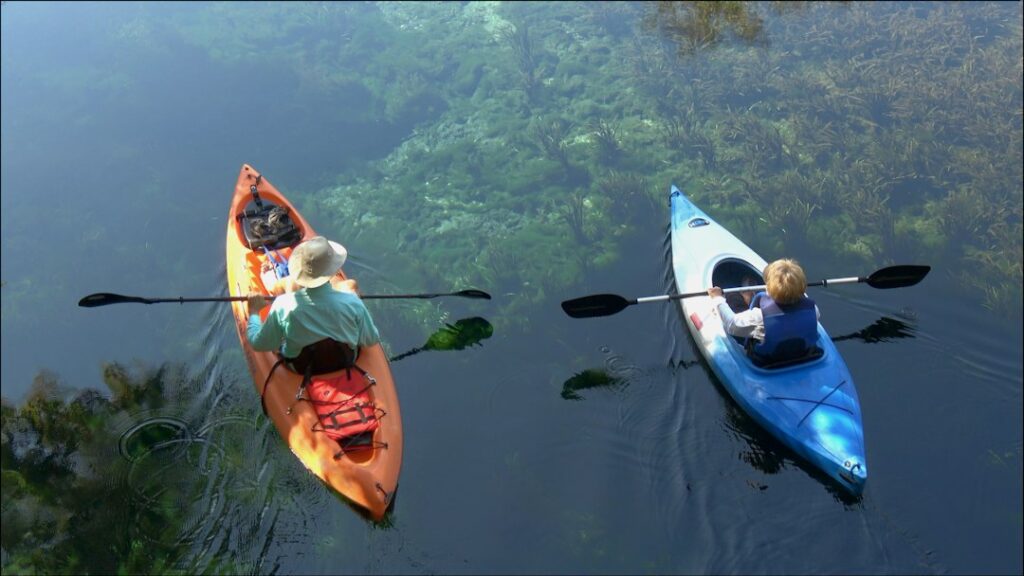
The Silver River offers some of the most rewarding paddling in Florida. Rent a kayak or canoe at the park’s concession and head upstream into a jungle of cypress, palm, and oak draped with Spanish moss. The current is gentle, the water stays a constant 72 degrees year-round, and you’re likely to see turtles, wading birds, and alligators sunning on the banks.
Keep an eye on the trees. Silver Springs is home to a population of rhesus monkeys, descendants of primates released here in the 1930s for a Tarzan film. They’ve thrived ever since, and you’ll often spot them jumping through the canopy or drinking at the river’s edge. They’re wild animals—observe from a distance and never feed them.
The paddle upstream to the headspring and back takes about two hours. Go early in the morning for wildlife and cooler temperatures, especially in summer.
Trails and Wildlife
Five miles of trails wind through hardwood forest and along the river. The River Trail follows the north bank for just over a mile, offering views of the spring run and access to shaded picnic spots. The Sandhill Trail loops through upland pine and scrub habitat, home to gopher tortoises, deer, and more than 150 bird species.
Birders should bring binoculars. You’ll see limpkins, ibis, wood storks, and various herons along the water, plus red-shouldered hawks and barred owls in the forest. Winter brings migratory species, including painted buntings and warblers.
The park’s museum, housed in a 1940s-era building, displays artifacts from the spring’s commercial past, including posters from the old attraction days and exhibits on the Seminole people who lived along these waters.
Planning Your Visit
Silver Springs State Park is located at 1425 NE 58th Avenue in Ocala, about 90 minutes north of Orlando and an hour south of Gainesville. The park opens at 8 a.m. daily; arrive early to beat the heat and crowds. Florida State Parks charge a per-vehicle entrance fee, and the glass-bottom boat tours and kayak rentals cost extra.
Bring water, sunscreen, and insect repellent—mosquitoes thrive in the riverside forest, especially during summer. The park has restrooms, picnic pavilions, and a small café near the boat dock. Swimming is not allowed in the spring run itself, but there’s a swimming area downstream at the day-use beach.
The best time to visit is fall through spring, when temperatures are mild and the water clarity peaks. Summer afternoons bring thunderstorms and higher crowds, though the constant 72-degree spring water offers relief from the heat.
Silver Springs has appeared in more films and TV shows than almost any other Florida location—six Tarzan movies, several James Bond scenes, and the 1950s TV series Sea Hunt were all filmed here. The water’s clarity made it a natural film set, and that same clarity still draws visitors who want to see Florida as it looked a century ago.
Want more stories about Florida’s springs, rivers, and wild places? Subscribe to the Love Florida newsletter—one short story a day, delivered to your inbox.
Tours & experiences in Florida


Powered by Viator. Some links are affiliate links — we may earn a small commission at no extra cost to you.