
Fort Myers holds a remarkable piece of American history along the Caloosahatchee River. The Edison and Ford Winter Estates preserve the waterfront retreats where Thomas Edison and Henry Ford spent their winters, conducted experiments, and cultivated one of history’s most famous friendships. Today, the 20-acre site welcomes visitors into Edison’s laboratory, tropical gardens, and the surprisingly intimate world of two men who changed modern life.
This isn’t a stuffy museum. It’s a living landscape where Edison’s original light bulbs still glow, massive banyan trees shade the grounds, and you can walk through the rooms where these innovators relaxed, worked, and entertained guests like Harvey Firestone and Charles Lindbergh.
The Edison Estate and Botanical Gardens
Thomas Edison first visited Fort Myers in 1885 and immediately purchased property to build Seminole Lodge, his winter retreat. He’d spend the next 46 winters here, and the estate became both sanctuary and laboratory. Edison planted over 1,000 species of plants and trees from around the world, testing bamboo for light bulb filaments and experimenting with goldenrod as a rubber source during World War I.
The botanical gardens remain the heart of the estate. Towering royal palms line the entrance drive—Edison planted them himself. Massive banyan trees, gifts from Harvey Firestone in 1925, now sprawl across the lawn with aerial roots forming natural archways. Tropical fruit trees, orchids, and rare palms create a lush canopy that feels more like a jungle than a manicured garden.
Inside the main house, docent-led tours reveal surprisingly modest quarters. Edison valued function over luxury. His furniture is simple, the rooms small by mansion standards, and everywhere you look, there’s evidence of his restless mind—books stacked on tables, a phonograph in the parlor, and the sleeping porch where he’d take his famous power naps.
The Laboratory and Museum
Edison’s laboratory, preserved exactly as he left it in 1931, might be the most compelling stop. Glass beakers line wooden shelves, chemical bottles gather dust in purposeful rows, and his experiments in rubber production remain frozen in time. Guided tours explain his tireless work ethic—Edison would lose himself in experiments for days, sleeping only when exhaustion forced him.
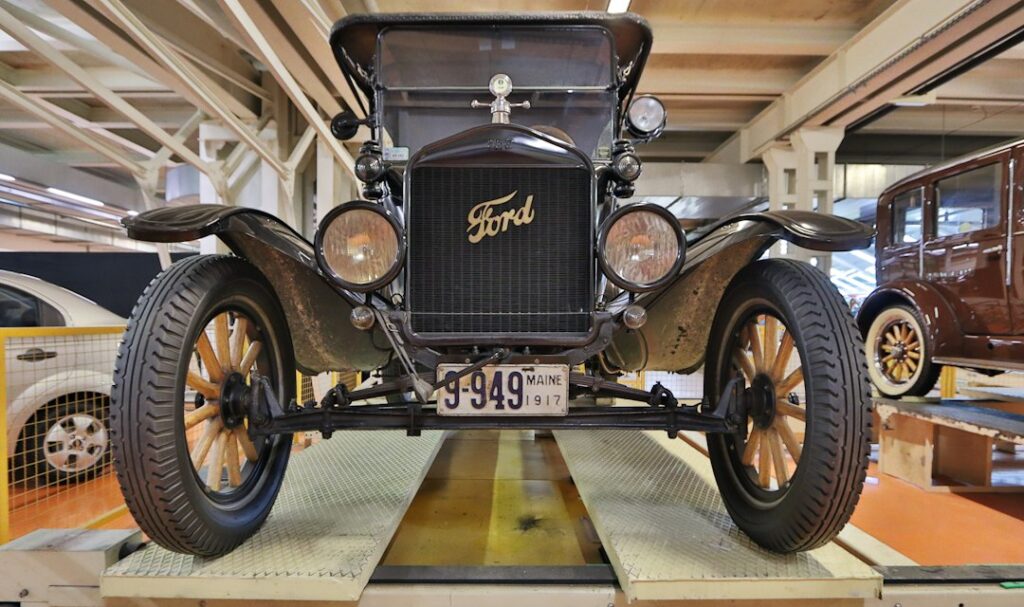
The museum houses the world’s largest collection of Edison inventions and artifacts. You’ll see early phonographs, motion picture cameras, hundreds of light bulb prototypes, and the 1916 Model T that Henry Ford gave his friend. Interactive displays let you try Morse code and watch Edison’s early films. Plan at least 45 minutes here—there’s more than you’d expect.
The Ford Estate
In 1916, Henry Ford purchased the property next door at Edison’s urging. Ford’s estate, called The Mangoes, is smaller but equally fascinating. The house reflects Ford’s more conservative taste—comfortable but unpretentious, with a focus on family life rather than experimentation.
What makes the Ford estate special is how it illustrates the friendship between these two very different men. Edison the inventor and tinkerer, Ford the industrialist and efficiency expert—they’d spend winter evenings together discussing ideas, fishing on the river, and hosting friends. The proximity of their homes speaks to how much they valued each other’s company.
Planning Your Visit
The estates are located at 2350 McGregor Boulevard in Fort Myers, about 15 minutes from Fort Myers Beach and easily combined with a beach day. The site is open daily from 9:00 a.m. to 5:30 p.m., with the last guided tour departing at 4:00 p.m.
Guided tours of the homes and laboratory run throughout the day and are included with admission. Self-guided garden tours let you explore at your own pace. During winter months (December through March), the estates offer extended hours on Thursdays with evening garden strolls—a lovely time to visit when temperatures cool and the setting sun casts golden light through the banyans.
Wear comfortable walking shoes and bring sunscreen. Much of the tour is outdoors, and Southwest Florida sun is strong year-round. The gardens provide shade, but you’ll be walking paved paths for at least an hour. A small café on site serves light snacks and drinks.
Edison’s birthday celebration in February draws crowds with special demonstrations and period reenactors. The annual Holiday Nights event in December illuminates the gardens with thousands of lights—Edison would approve.
Allow two to three hours for a complete visit. History enthusiasts and plant lovers could easily spend longer wandering the gardens and reading every placard. Children enjoy the hands-on museum exhibits, though the guided house tours require patience from younger kids.
Getting There and Nearby Attractions
From Interstate 75, take exit 136 and head west on Dr. Martin Luther King Jr. Boulevard, which becomes McGregor Boulevard. The estates are well-marked on the left. Parking is free and plentiful. If you’re staying at Fort Myers Beach, it’s a straight shot up Estero Boulevard and San Carlos Boulevard.
The location makes it easy to combine with other Fort Myers attractions. The downtown River District, with its restaurants and shops, is a 10-minute drive north. The Fort Myers Beach sand and Gulf waters are 20 minutes southwest. For wildlife enthusiasts, the J.N. “Ding” Darling National Wildlife Refuge on Sanibel Island is about 30 minutes away.
The Edison and Ford Winter Estates remind you that Florida’s appeal isn’t new. These men chose Fort Myers for the same reasons visitors come today—warm winters, natural beauty, and a slower pace that makes space for creativity and rest.
Want more Florida travel stories like this? Subscribe to the Love Florida newsletter and get one short story a day, delivered to your inbox each morning.
Tours & experiences in Florida


Powered by Viator. Some links are affiliate links — we may earn a small commission at no extra cost to you.