
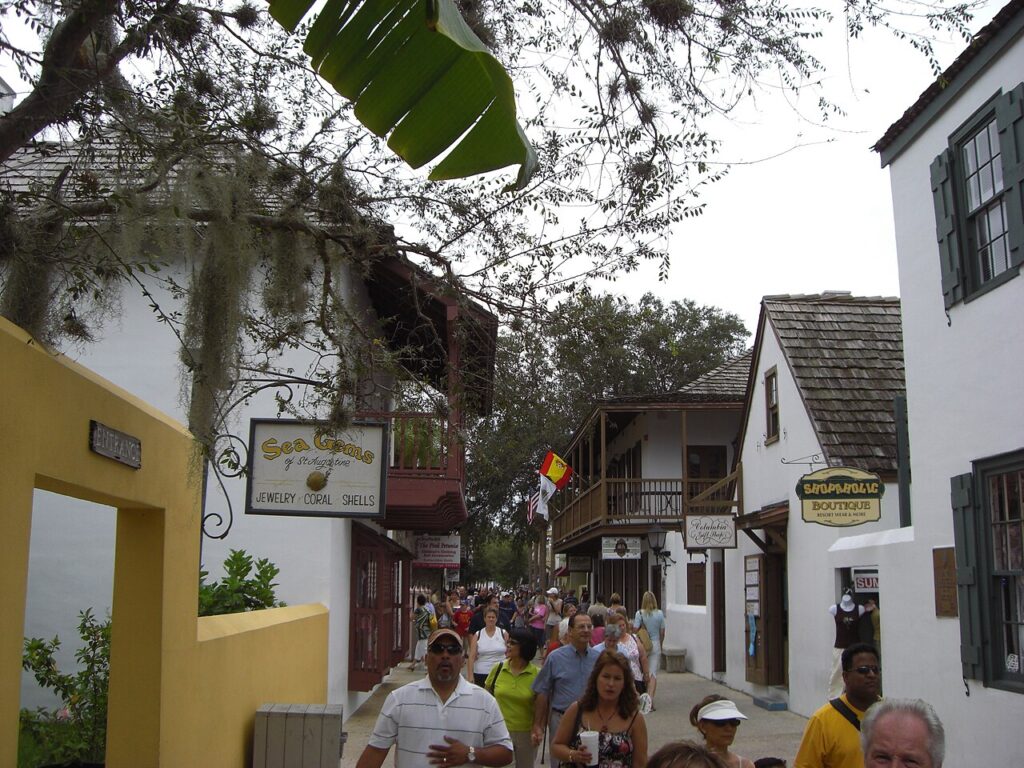
Why Walking Is the Best Way to See St. Augustine
St. Augustine’s historic district packs 450 years of history into a compact, walkable area that spans roughly one square mile. The narrow streets were designed for horses and foot traffic, not cars, which makes exploring on foot both practical and enjoyable. You’ll discover hidden courtyards, centuries-old architecture, and historical markers that tell the story of America’s oldest continuously occupied European settlement.
Most of the major attractions sit within a 20-minute walk of each other, and parking in the historic district can be challenging and expensive. Wear comfortable shoes—the brick streets and uneven sidewalks require sturdy footwear—and plan for at least half a day to cover the highlights without rushing.
The Must-See Historical Landmarks
Start your walk at the Castillo de San Marcos, the 17th-century Spanish fort that anchors the waterfront. Built from coquina stone between 1672 and 1695, it’s the oldest masonry fort in the continental United States. Allow at least an hour to explore the gun deck, dark rooms, and exhibits. The fort opens at 9 a.m., and arriving early means smaller crowds and better photo opportunities along the bay.
From the Castillo, walk south along the waterfront to the Bridge of Lions, then head west into the heart of the historic district. Stop at the Oldest Wooden Schoolhouse on St. George Street, a quirky red cedar and cypress structure held together with wooden pegs and handmade nails. It’s touristy but authentically old, dating to the early 1700s.
Continue down St. George Street, the pedestrian-only main thoroughfare lined with shops, restaurants, and historical buildings. The González-Alvarez House, also called the Oldest House, sits just off St. George on St. Francis Street. Built in the early 1700s, it survived fires, sieges, and hurricanes, and the museum offers a fascinating look at colonial life across Spanish, British, and American periods.
Beyond the Main Attractions
Walk south on St. George Street until it becomes a residential area past the city gates. Turn left on King Street to reach the Lightner Museum, housed in the former Alcazar Hotel built by Henry Flagler in 1888. The Gilded Age collections—everything from Tiffany glass to Victorian-era curiosities—are worth the admission, and the former indoor swimming pool is now a stunning café.
Across the street, Flagler College occupies the even more ornate former Ponce de León Hotel. Free guided tours run throughout the day and showcase the Spanish Renaissance architecture, Tiffany windows, and rotunda that make this one of the most beautiful college campuses in America.
For a quieter experience, explore the side streets west of St. George. Aviles Street, dating to the 1500s, claims to be the oldest street in the country. It’s narrow, shaded, and home to art galleries, a chocolate shop, and the Ximenez-Fatio House Museum. The Spanish Military Hospital Museum on Aviles offers demonstrations of colonial-era medical practices that are equal parts educational and unsettling.
Practical Tips for Your Walk
St. Augustine’s climate can be brutal in summer, with heat and humidity peaking from June through September. Early morning or late afternoon walks are most comfortable, and you’ll find the historic district less crowded before 10 a.m. or after 4 p.m.
Parking is limited in the historic district. The city operates a garage on Cordova Street near the Lightner Museum that charges a daily flat rate. Free parking is available outside the historic area with a walk or trolley ride into town. Several companies run hop-on, hop-off trolley tours, which can be useful for getting oriented before you explore on foot.
Most museums and historical sites charge separate admission, but combination tickets are available for multiple attractions. The Castillo de San Marcos is a National Park Service site and accepts annual passes.
Bring water and sunscreen—much of St. George Street lacks shade. Duck into one of the many cafés or ice cream shops when you need a break. For lunch, the Columbia Restaurant on St. George Street serves excellent Spanish and Cuban cuisine in a historic setting, though it’s pricier than casual spots nearby.
Allow time to simply wander. Some of the best moments in St. Augustine come from discovering a hidden courtyard, a plaque marking where Ponce de León supposedly landed, or a street musician playing beneath a canopy of old oaks. The city rewards curiosity more than rigid itineraries.
Ready to discover more corners of Florida beyond the guidebooks? Subscribe to the Love Florida newsletter and get one short story a day delivered to your inbox—the beaches, springs, towns, and flavors that make this state unforgettable.
Tours & experiences in Florida


Powered by Viator. Some links are affiliate links — we may earn a small commission at no extra cost to you.