
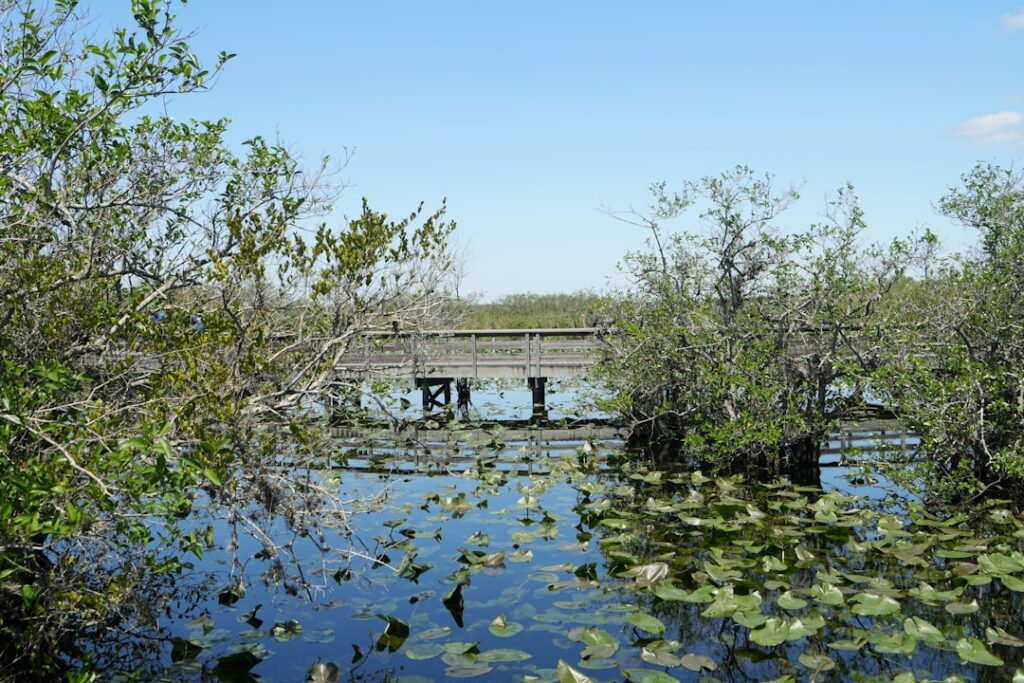
The Everglades isn’t just a swamp—it’s a river of grass stretching across 1.5 million acres of South Florida, home to alligators, wading birds, dolphins, and the elusive Florida panther. This UNESCO World Heritage Site offers experiences you won’t find anywhere else on Earth, from gliding through sawgrass prairies on an airboat to paddling mangrove tunnels where manatees feed in winter.
Planning your first visit can feel overwhelming. The park has multiple entrances, dozens of trails, and activities ranging from ranger-led walks to backcountry camping. Here’s how to make the most of your time in America’s most unique national park.
Everglades National Park: The Main Entrance
Most visitors enter through the Ernest F. Coe Visitor Center near Homestead, about 45 minutes southwest of Miami. From here, the 38-mile road to Flamingo takes you through distinct ecosystems—pine rocklands, sawgrass prairies, cypress domes, and coastal mangroves.
Stop at the Anhinga Trail first. This half-mile boardwalk at Royal Palm is the single best place in the park to see alligators up close, along with anhingas, herons, and turtles. Go early in the morning or late afternoon during the dry season (December through April) when wildlife congregates around shrinking water holes.
Continue to Flamingo at the road’s end, where Florida Bay meets the mainland. Rent a kayak or canoe to paddle the Nine Mile Pond loop or join a Flamingo Everglades Boat Tours cruise through the backcountry. The two-hour sunset tour offers excellent chances to spot dolphins, crocodiles, and roseate spoonbills.
Winter is peak season—cooler temperatures, fewer mosquitoes, and concentrated wildlife. Summer brings afternoon thunderstorms and clouds of insects. If you visit May through November, bring industrial-strength bug spray and plan morning activities only.
Shark Valley: The Scenic Loop
The Shark Valley entrance on the Tamiami Trail (US 41) offers a completely different Everglades experience. A 15-mile paved loop takes you deep into the sawgrass on foot, by bicycle, or aboard the excellent two-hour tram tour. Midway, climb the 65-foot observation tower for sweeping views across the river of grass.
Alligators sun themselves along the loop road year-round. During winter dry season, you might count dozens in a single visit. The tram guides share stories about the ecosystem, Miccosukee history, and the decades-long effort to restore natural water flow through the Everglades.
Rent bikes at the entrance if you want to explore at your own pace—the flat terrain and one-way traffic pattern make it easy even for casual riders. Start early to avoid midday heat, and carry plenty of water.
Airboat Tours and Wild Florida
While airboats aren’t allowed in the national park proper, several excellent operations run tours in adjacent areas. These high-speed rides through sawgrass marshes get you deep into gator territory and showcase the Everglades’ vastness in ways you can’t experience on foot.
The Florida Everglades Airboat Tour and Wild Florida Admission with Optional Lunch combines a 30-minute airboat ride with access to a wildlife park housing rescued Florida animals you might not spot in the wild—panthers, black bears, bobcats, and native birds. It’s a great introduction if you’re short on time or traveling with kids who want guaranteed animal encounters.
Wild Florida Drive-Thru Safari and Gator Park Admission near Kenansville offers another combination experience—drive through a preserve where bison, watusi, and zebras roam, then take an airboat tour and watch gator demonstrations. It’s north of Lake Okeechobee, about 90 minutes from both Orlando and the main Everglades entrance.
Gulf Coast Entrance and Ten Thousand Islands
The Gulf Coast Visitor Center in Everglades City opens onto a labyrinth of mangrove islands and tidal creeks. This is paddling paradise—rent a kayak or canoe and navigate marked water trails through tunnels of red mangroves where herons nest and dolphins hunt.
The Turner River Canoe Trail is a favorite for beginners, offering a chance to spot alligators and wading birds along a gentle, marked route. For a bigger adventure, experienced paddlers can tackle the 99-mile Wilderness Waterway that connects Everglades City to Flamingo over several days.
Boat tours departing from Everglades City cruise through the Ten Thousand Islands, with naturalist guides pointing out ospreys, eagles, manatees, and the occasional crocodile. Winter offers the calmest conditions and best wildlife viewing.
What to Bring and Know Before You Go
Sun protection is essential year-round—hat, sunglasses, and SPF 50 sunscreen. The reflection off water and light-colored limestone intensifies UV exposure. Long, light-colored clothing helps with both sun and insects.
Bring binoculars for birding and wildlife watching. The Everglades hosts over 360 bird species, including rare wood storks and swallow-tailed kites in summer.
Download offline maps if you’re exploring backcountry areas—cell service is spotty to nonexistent in much of the park. Check the National Park Service website for current trail and road conditions before you visit, especially during summer rainy season when some areas flood.
Never feed or approach wildlife. Alligators are generally docile but can be dangerously fast. Keep at least 15 feet away, never swim in Everglades waters, and keep pets leashed and away from water’s edge.
Entry fees for the national park are $30 per vehicle, valid for seven days at all entrances. America the Beautiful passes are accepted and pay for themselves quickly if you’re visiting multiple Florida parks.
Want more insider tips for exploring Florida’s wild places? Subscribe to the Love Florida newsletter and get one short story a day about the state’s best beaches, springs, trails, and hidden corners.
Heads up — some links in this article are affiliate links. If you sign up through them, we may earn a small commission at no extra cost to you. We only recommend tools we use ourselves.
Tours & experiences in Florida


Powered by Viator. Some links are affiliate links — we may earn a small commission at no extra cost to you.