
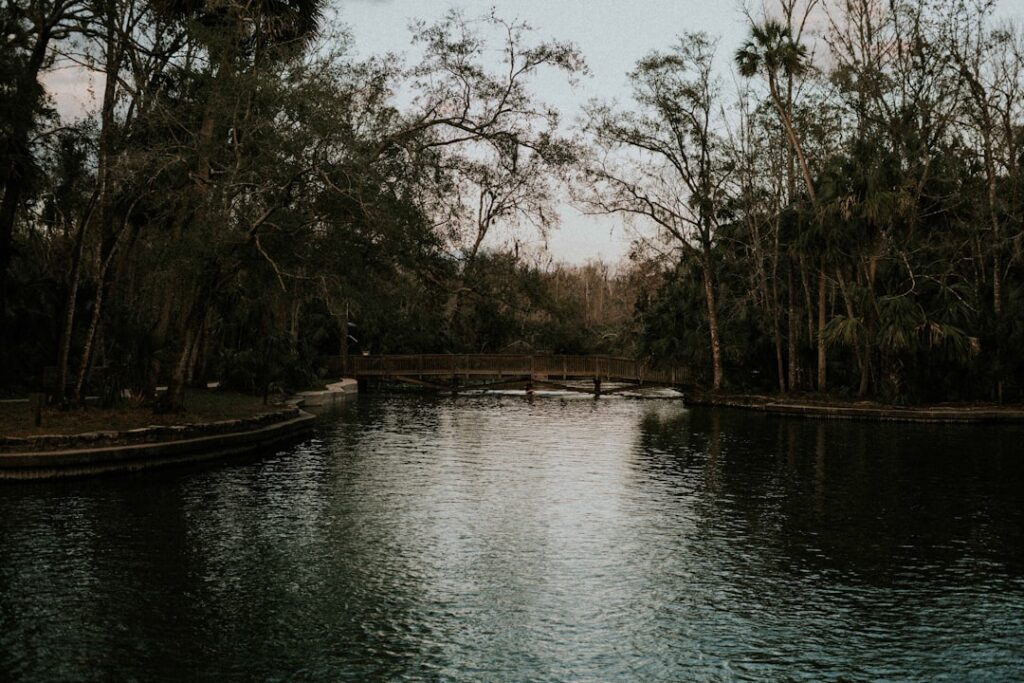
Florida’s natural springs pump out millions of gallons of crystal-clear, 72-degree water every day, creating some of the state’s most beautiful swimming spots. But when you visit makes all the difference between a peaceful float down a spring-fed river and jockeying for inner tubes with hundreds of other visitors.
The good news? There’s a perfect season for every kind of spring experience, whether you’re after manatee encounters, quiet paddling, or family-friendly tubing adventures.
Winter: Manatee Season at the Springs
December through March transforms certain springs into manatee sanctuaries. When Gulf and ocean temperatures drop, hundreds of manatees migrate to the constant 72-degree spring water for warmth.
Crystal River and Homosassa Springs become manatee headquarters during these months. At Three Sisters Springs in Crystal River, you can snorkel alongside dozens of manatees on a single morning. Blue Spring State Park near Orange City hosts one of Florida’s largest manatee populations—the park counted over 600 individuals during peak season in recent winters.
January and February offer the most reliable manatee sightings, but these are also the busiest months at manatee springs. Book tours well in advance and arrive early. Water temperatures feel refreshing rather than cold, though most snorkelers wear wetsuits for extended swims.
The trade-off: cool air temperatures mean you’ll want a towel and warm clothes waiting on shore. Morning air temps in the 50s and 60s are common, though midday warms up nicely.
Spring and Fall: The Sweet Spot for Most Springs
April through May and September through November offer the best combination of pleasant weather, manageable crowds, and excellent spring conditions.
These shoulder seasons bring warm days without summer’s intense heat or afternoon thunderstorms. Water temperature feels perfect when air temps hover in the 70s and 80s. You’ll find shorter lines at popular tubing springs like Ichetucknee Springs State Park and Rainbow Springs State Park.
April and May deliver especially clear water as spring rains haven’t yet stirred up tannins from the rivers. Wildflowers bloom along spring runs, and wildlife is active. October and November bring similar conditions with the added bonus of fall migration—great for birding along spring-fed rivers.
Weekdays during these months offer the most peaceful experiences. At Ginnie Springs or Weeki Wachee Springs State Park, you might have swimming holes nearly to yourself on a Tuesday morning in April.
Summer: Peak Season and What to Expect
June through August brings Florida families to the springs in full force. That 72-degree water feels absolutely perfect when air temperatures push into the 90s, making springs the state’s natural air conditioning.
Popular tubing destinations like Ichetucknee Springs can reach capacity on summer weekends, closing gates by mid-morning. If you’re visiting in summer, go midweek or arrive when parks open. Better yet, choose lesser-known springs like Fanning Springs State Park or Manatee Springs State Park on the Nature Coast—beautiful swimming with fewer crowds.
Afternoon thunderstorms roll through most summer days, usually between 2 and 5 p.m. Plan your spring visit for morning, enjoy lunch, and you’ll likely avoid the worst weather. Most springs close to swimmers during lightning, so check forecasts.
Summer does offer one advantage: longest daylight hours mean more time to explore. Some springs stay open until 8 p.m. during summer months.
Planning Your Spring Visit
Regardless of season, a few strategies improve any spring experience. State park springs require a Florida State Parks pass or entry fee—an annual pass pays for itself after a few visits. Popular springs like Ichetucknee limit daily visitors, so weekend warriors should arrive early or reserve tubes in advance where possible.
Bring water shoes for rocky spring bottoms, reef-safe sunscreen to protect the ecosystem, and a waterproof bag for phones and keys. If you’re snorkeling at manatee springs in winter, book guided tours through reputable operators who follow manatee protection guidelines.
Water temperature stays at 72 degrees year-round, but your comfort depends on air temperature and how long you stay in. What feels refreshing for an hour in July might feel chilly after three hours in January.
The absolute best time? Early morning, any season. You’ll beat crowds, catch the clearest water, and see the most wildlife. There’s something magical about being first in the water at a Florida spring, when the only sound is water bubbling up from the aquifer below.
Want more insider tips on Florida’s best natural areas and hidden gems? Subscribe to the Love Florida newsletter—one short story a day delivered to your inbox each morning.
Tours & experiences in Florida


Powered by Viator. Some links are affiliate links — we may earn a small commission at no extra cost to you.