
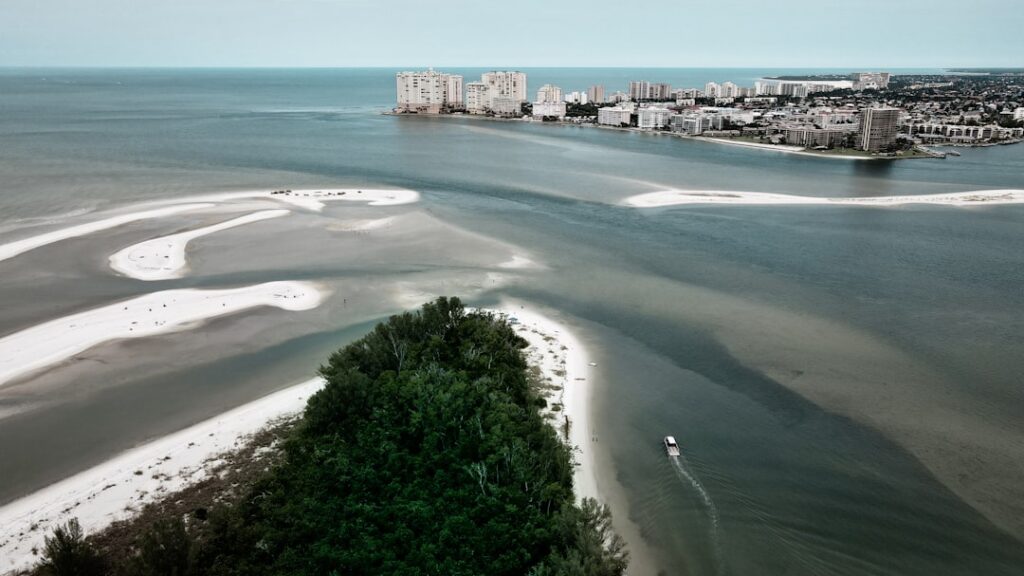
Marco Island sits at the northern gateway to the Ten Thousand Islands, a 30-minute drive south from Naples along the scenic Tamiami Trail and San Marco Road. While Naples gets most of the attention from visitors to Southwest Florida, Marco Island offers something different: wider beaches, legendary shelling, and a slower pace that feels worlds away from the mainland.
This barrier island—the largest in Florida’s Ten Thousand Islands—makes an ideal day trip from Naples, whether you’re chasing the perfect shell, looking for dolphin sightings, or simply want to experience one of the Gulf Coast’s most beautiful stretches of sand.
Getting There and Getting Around
The drive from downtown Naples to Marco Island takes about 35 minutes via US-41 South and Collier Boulevard (CR-951). Once you cross the bridge onto the island, you’ll find everything relatively compact and easy to navigate. Parking at the public beaches is metered but plentiful, especially if you arrive before 10 a.m.
Most visitors make Tigertail Beach their first stop, and for good reason. Located at the island’s northern end, Tigertail offers not just a beautiful beach but also a tidal lagoon that’s perfect for kayaking and spotting shore birds. The beach itself stretches for miles when the tide is low, revealing sandbars where you can walk far out into the Gulf.
Resident Beach, near the Marriott, provides another excellent option with calmer waters and consistent shelling. South Marco Beach, at the southern tip near the Hilton, tends to be quieter and offers stunning sunset views.
The Best Shelling in Southwest Florida
Marco Island’s beaches consistently rank among Florida’s best for shell collecting, particularly after storms or during low tide. Unlike many heavily trafficked Florida beaches, you’ll still find intact shells here: fighting conchs, lightning whelks, sand dollars, and the occasional junonia if you’re very lucky.
Tigertail Beach’s lagoon area produces especially good finds. Arrive at low tide—check the tide chart before you go—and bring a mesh bag. Early morning after a night of strong winds typically yields the best results. Remember that live shells (those with animals still inside) must be returned to the water.
The sandbars that appear at low tide between Tigertail Beach and the mainland create temporary islands where shells accumulate. Wade carefully and watch for stingrays by shuffling your feet as you walk.
Where to Eat on Marco Island
For lunch, head to Old Marco Village on the eastern side of the island. This small cluster of shops and restaurants near the Goodland Bridge offers several excellent options. The Snook Inn serves fresh grouper sandwiches and stone crab claws (in season from October through May) with views of the Marco River.
If you prefer something more casual, Ciao Ristorante serves excellent Italian on the main commercial strip along North Collier Boulevard, while The Sand Bar Restaurant at the Marriott provides beachfront dining with reliable seafood and cold drinks.
For a late afternoon pick-me-up, stop at Nene’s Kitchen for authentic Mexican fare or grab key lime pie from the Island Gourmet before heading back to Naples.
Wildlife and Water Activities
The waters around Marco Island teem with bottlenose dolphins, manatees, and sea turtles. Several operators run dolphin-watching tours that depart from the marinas along the island’s eastern shore, winding through the mangrove tunnels of the Ten Thousand Islands.
Kayak rentals are available at Tigertail Beach, where you can paddle through the protected lagoon and into the mangrove forests. The calm, shallow water makes this an ideal spot for beginners, and you’re almost guaranteed to see roseate spoonbills, great blue herons, and ospreys.
If you’re visiting between May and October, Marco Island’s beaches serve as nesting grounds for loggerhead sea turtles. Early morning walks might reveal tracks where females came ashore overnight to lay eggs. Nests are clearly marked and protected—observe from a distance and never use flashlights on the beach after dark during nesting season.
Timing Your Visit
Winter and early spring (December through April) bring the most pleasant weather and the calmest Gulf waters, though this is also peak season when beaches are most crowded. Summer means afternoon thunderstorms and higher temperatures, but you’ll have the beaches largely to yourself on weekday mornings.
Shell collectors should plan trips around the lunar cycle—the week following a new or full moon typically brings the lowest tides and best shelling conditions. Hurricane season runs from June through November, with September and October seeing the highest activity.
Plan for at least five to six hours on Marco Island to fully enjoy the beaches, grab lunch, and explore the quieter spots away from the main resort area. Most day-trippers from Naples leave by late afternoon to avoid bridge traffic and catch sunset back on the mainland.
Want more insider tips on Florida’s hidden gems and secret spots? Subscribe to the Love Florida newsletter—one short story a day, delivered to your inbox each morning.
Tours & experiences in Florida


Powered by Viator. Some links are affiliate links — we may earn a small commission at no extra cost to you.